

Best Insoles for Nurses Standing 12-Hour Shifts

Most insole guides for nurses were written by people who have never worked a 12-hour shift. They recommend the same cushioned gel inserts sold to office workers and retail employees -- products designed for 6-8 hours of moderate standing that compress into flat foam by hour ten of a nursing shift.
Nursing places a specific and demanding set of biomechanical requirements on your feet that most insole products weren't engineered to meet. Twelve hours on hard hospital floors, with rapid transitions between standing and walking, in shoes that may prioritize slip resistance over support, creates foot loading conditions that eliminate most of what's available in a typical pharmacy aisle.
This guide covers what nursing actually does to your feet, why the most common recommendations fall short, and what the evidence supports for foot support that holds up through a full shift -- and through the career.
What 12-Hour Shifts on Hospital Floors Actually Do to Your Feet
The demands nursing places on feet are distinct from most other standing professions. Understanding them explains why so many standard recommendations fail nurses specifically.
Sustained Hard Surface Loading
Hospital floors -- sealed concrete, linoleum, ceramic tile -- are among the most unforgiving surfaces a person can stand on for extended periods. Zero give means every step transfers impact force directly to your foot with no surface absorption. Over a 12-hour shift covering 4-8 miles of walking, this adds up to millions of pounds of cumulative force through the plantar fascia, arch, and heel.
The Walking-to-Standing Transition Problem
Unlike warehouse workers or retail employees who are primarily walking or primarily standing, nurses do both -- often switching rapidly between the two. Each transition from static standing to active walking reloads the plantar fascia differently, creating a complex loading pattern that's harder on connective tissue than either sustained walking or sustained standing alone.
Shift Compression -- Three to Four Days Per Week
A nurse working three 12-hour shifts per week is doing more cumulative foot loading in those three days than most workers do in five. The recovery window between shifts is shorter than the loading period, which means the plantar fascia is repeatedly loaded before it has fully recovered from the previous shift. This compounding pattern is how plantar fasciitis develops even in nurses who start their careers with no foot pain history.
Footwear Compromises
Nursing clogs and slip-resistant athletic shoes prioritize infection control protocols, slip resistance, and ease of cleaning over biomechanical support. Many popular nursing footwear choices provide excellent surface protection and poor arch support. The factory insole in most nursing shoes is a thin foam layer designed to meet a cost target -- not to support a foot through a 12-hour shift.
The Plantar Fasciitis Tipping Point
Plantar fasciitis develops when the plantar fascia is repeatedly loaded beyond its capacity to recover. For nurses, this tipping point arrives faster than for most professionals because the loading intensity (hard floors, rapid transitions, heavy patients) and loading duration (12 hours, three or more days per week) combine in a way that overwhelms generic insole support within months rather than years.
Why the Most Common Nurse Insole Recommendations Fall Short
Nursing forums and healthcare blogs circulate the same insole recommendations year after year. Most of them are reasonable starting points. None of them are the full solution.
Cushioned Athletic Insoles (Sof Sole, Spenco, etc.)
Cushion reduces impact feel early in a shift but doesn't address arch support. Cushion compresses. By hour eight of a shift on hard floors, a cushioned insole has compressed to a fraction of its original thickness and is providing minimal impact protection and no meaningful arch support. They feel great in the store. They fail by mid-afternoon.
Superfeet Green / Blue
A meaningful upgrade over pure cushion insoles. The nylon stabilizer cap provides structure that pure foam can't. Better arch support than most alternatives. The limitation: designed for a population average, not your specific foot. For nurses whose arch height matches the Superfeet model, they work well. For everyone else, the support is a compromise -- and under 12-hour shift conditions, compromised arch support compounds into plantar fasciitis.
Gel Heel Cups
Provide targeted heel cushioning but leave the arch entirely unsupported. Heel cups solve the symptom of heel pain without addressing the structural cause -- insufficient arch support forcing the plantar fascia to do work it shouldn't have to do. Useful as a short-term measure. Not a solution.
Nursing-Specific Branded Insoles
Several insole brands market directly to nurses with healthcare-themed packaging. The product inside is typically a generic foam insole with cushioning marketing language. The nursing-specific branding is not matched by nursing-specific engineering. Check the materials: if it's foam-based without a structural component, it will compress under shift conditions regardless of the packaging.

Insoles for Nurses: Ranked for 12-Hour Shift Performance
|
#1 |
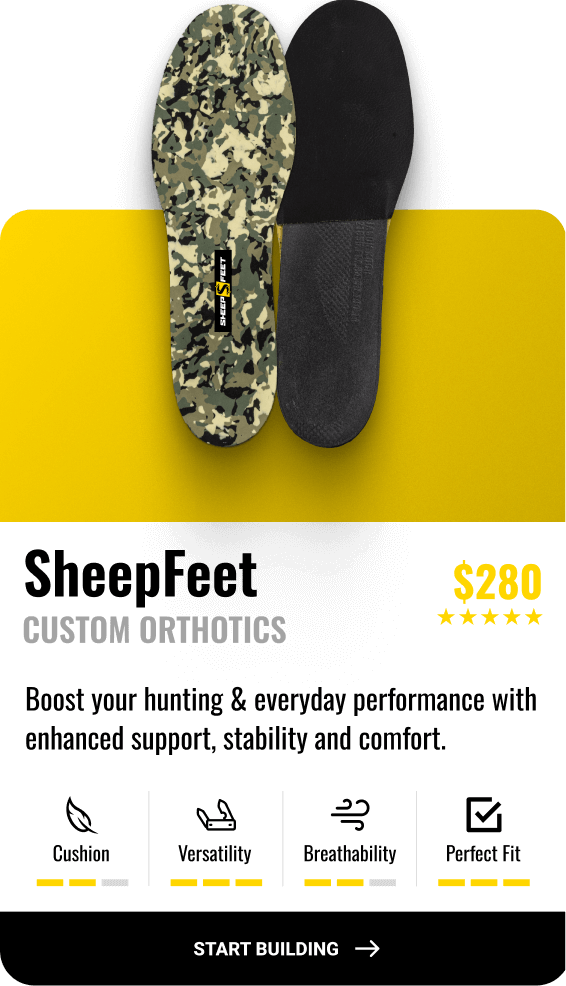
SheepFeet Custom Orthotics — Best for 12-hour shifts |
|
Best for: Any nurse with plantar fasciitis history, foot pain, or who regularly works 3+ shifts per week Shift performance: Maintains full arch support throughout a 12-hour shift -- rigid shell does not compress under sustained hospital floor loading Fit precision: Built from a scan of your specific foot using CastDAR technology -- arch support placed at your exact arch height, not a population average Durability: 3-5 years of regular use -- significantly longer than any OTC option under nursing conditions Note: $280 amortized = $56-93/year. No appointment required. Order from home via iPhone app or Impression Kit. |
|
#2 |
Superfeet Blue — Best OTC option for medium-arch nurses |
|
Best for: Nurses with a medium arch who need a quality OTC option while considering custom orthotics Shift performance: Better than foam-only options; structured nylon cap provides real arch support for moderate shifts Fit precision: Population average medium-arch fit -- works well if your arch matches; compromised if it doesn't Durability: Replace every 8-12 months under nursing shift conditions; compresses faster than hard-use rating under prolonged hospital floor standing Note: Genuinely better than most alternatives. Not custom. Annual replacement required for nurses. |
|
#3 |
Powerstep Pinnacle — Good for flexible arch support preference |
|
Best for: Nurses who find Superfeet too rigid or who have had past issues with hard arch support Shift performance: Softer construction suits a wider range of feet; better compliance for nurses sensitive to firm arch support Fit precision: Population average fit; semi-flexible construction compresses faster than Superfeet under sustained shift loading Durability: Replace every 6-9 months under nursing conditions -- softer materials lose profile faster Note: Good starting option. Step down in durability from Superfeet under full shift loading. |
|
#4 |
Factory Nursing Shoe Insole — Not recommended for shifts |
|
Best for: Emergency backup only -- if your actual insoles are damaged or unavailable Shift performance: Minimal -- thin foam with no structural support; compresses to nothing within hours of shift loading Fit precision: Generic shape, no arch support, no heel stabilization Durability: Fails within weeks under nursing shift conditions Note: Remove and replace before your first shift. Every nursing shoe manufacturer ships the cheapest acceptable insole. |
|
Foot Support Built for Your Specific Foot SheepFeet custom orthotics are fitted from home using CastDAR technology -- no appointment required. Maintains arch support through a full 12-hour shift. $280, lasts 3-5 years. |
Pairing Custom Orthotics with Your Nursing Footwear
Athletic-Style Nursing Shoes (New Balance, Brooks, HOKA)
The best footwear category for custom orthotics. Athletic shoes typically have removable insoles that pull out easily, and sufficient internal volume to accommodate a custom orthotic without making the shoe too tight. This combination -- custom orthotic plus quality athletic shoe -- is the optimal setup for 12-hour shift foot support. Remove the factory insole completely before installing your custom orthotic.
Dansko and Similar Clog-Style Nursing Shoes
Dansko and similar professional clogs often have removable footbeds. Check whether your specific model has a removable footbed before purchasing custom orthotics. If the footbed is removable, a custom orthotic can typically be installed. If the volume is tight, you may need a half-size larger clog to accommodate the orthotic without pressure.
Crocs (Classic and Healthcare Variants)
Crocs have a removable liner in many healthcare models. The volume tends to be generous. Custom orthotics generally fit Crocs healthcare variants well, though the soft sole of a Croc provides less structural partnership with a custom orthotic than a firm-soled athletic shoe. Best used when hospital infection control policies require closed-toe soft shoes.
|
💡 The most important footwear rule for nurses with foot pain Your custom orthotic works with your shoe, not independently of it. A custom orthotic in a flat, unsupportive shoe is better than nothing -- but a custom orthotic in a shoe with a firm midsole and a secure heel counter is significantly better. If you're serious about foot health over a nursing career, both the orthotic and the shoe matter. Replace both when either degrades. |
The Shift Foot Care Protocol That Actually Works
Custom orthotics address the structural root cause of nursing foot pain. These habits address the daily management that keeps the underlying tissue healthy:
Before the Shift
-
Stretch the plantar fascia before your first step -- pull your toes toward your shin, hold 30 seconds, repeat 3 times. Do this while still seated before standing for the first time
-
Install your orthotics and lace or strap your shoes before leaving the house -- don't adjust footwear on the unit
-
If you have active plantar fasciitis, apply arch support taping (Leukotape) before putting shoes on
During the Shift
-
At meal breaks, sit with feet elevated if possible -- even 10 minutes of elevation reduces inflammatory fluid buildup
-
Change into dry socks at meal break if your feet sweat significantly -- moisture accelerates friction and fatigue
-
Avoid standing in one position for extended periods during charting or tasks -- shifting weight and brief walking prevents static loading accumulation
After the Shift
-
Remove shoes immediately at home -- don't walk barefoot on hard floors; change into supportive slippers or recovery footwear
-
Elevate feet above heart level for 20 minutes -- reduces end-of-shift inflammatory fluid that causes morning heel pain
-
Perform plantar fascia stretch sequence before bed and again before your first steps in the morning
🔗 How the SheepFeet Fitting Process Works
🔗 Got Plantar Fasciitis Pain? Step Toward Relief with Custom Orthotics

Frequently Asked Questions
What are the best insoles for nurses standing 12-hour shifts?
The best insoles for nurses in 12-hour shifts are custom orthotics fitted to their specific foot. Hospital floors are unforgiving, shift duration leaves no recovery time between loading cycles, and generic foam insoles compress and fail under sustained shift conditions. SheepFeet custom orthotics maintain their arch support through a full shift and are built from a scan of your specific foot with no appointment required.
Why do nurses get plantar fasciitis?
Nurses develop plantar fasciitis from the combination of prolonged hard floor standing, rapid walking during rounds, working 3-4 consecutive 12-hour shifts weekly, and inadequate arch support in standard nursing footwear. The plantar fascia is repeatedly overloaded without adequate recovery time between shifts, creating the progressive inflammation that causes plantar fasciitis.
Do custom orthotics work in nursing clogs?
It depends on the clog. Many nursing clogs have removable footbeds that can be replaced with a custom orthotic. Check whether your specific clog model has a removable insole before ordering. For nurses in athletic nursing shoes, custom orthotics install easily by removing the factory insole.
Are custom orthotics worth it for nurses?
Yes. At $56-$93 per year amortized, they cost roughly the same as annual OTC insole replacement -- with the significant advantage of custom fit and structural durability under shift conditions. Most nurses who switch to custom orthotics report meaningful improvement in end-of-shift foot and leg fatigue within the first weeks of use.
What causes foot pain after a 12-hour nursing shift?
End-of-shift foot pain is caused by cumulative overloading of the plantar fascia throughout the shift without adequate arch support. Burning heel pain and arch aching worsen throughout the shift as the plantar fascia absorbs stress that should be distributed by a properly fitted insole.
How do I order SheepFeet orthotics for nursing shoes?
Download the SheepFeet app and scan your feet using CastDAR technology on your iPhone, or order the Impression Kit if you don't have an iPhone. No appointment required. Ships to your door. Install by removing the factory insole from your nursing shoes.
The Bottom Line
|
BOTTOM LINE Twelve-hour shifts on hospital floors require foot support that's actually built for the demand. Custom orthotics fitted to your specific foot are the only option that provides sustained arch support through a full shift, addresses the individual structural mismatch that causes plantar fasciitis, and lasts long enough to justify the investment. Everything else is a compromise you'll be replacing every year. |
The nurses who make it through a full career without chronic foot pain aren't the ones with the best pain tolerance. They're the ones who stopped managing foot pain as a professional hazard and started treating it as a solvable structural problem. The solution takes ten minutes from your phone.
Foot Support Built for Your Specific Foot
SheepFeet custom orthotics are fitted from home using CastDAR technology — no appointment required. Maintains arch support through a full 12-hour shift. $280, lasts 3–5 years.
SHOP SHEEPFEET CUSTOM ORTHOTICS →

