

Best Elk Hunting Boots 2026: What Works in the Field and Why

There is no piece of hunting gear more personal than your boots. Optics can be shared. Packs can be borrowed. Your boots have to fit your specific foot, survive your specific terrain, and carry you through your specific number of miles per day without becoming the reason your hunt ends early.
With that context, here’s an honest, terrain-focused breakdown of the best elk hunting boots for 2026 — what each excels at, where each falls short, and the one upgrade that applies to every boot on this list regardless of brand or price.
What Actually Matters in an Elk Hunting Boot
Before the boot names: here are the five variables that determine whether a boot performs for elk hunting specifically. Every recommendation below is filtered through these criteria.
-
Stiffness matched to terrain. A stiffer boot transfers load better on steep, technical ground and provides more lateral ankle support on sidehills. A more flexible boot reduces fatigue on high-mileage days on moderate terrain. Neither is universally superior — the right stiffness depends on where you hunt.
-
Pack load capacity. Elk hunting means carrying pack weight, often significant pack weight on pack-out days. Some boots are built for this. Others aren’t. A boot’s midsole construction determines how it handles sustained heavy load across multiple days.
-
Insulation matched to season. An early archery hunter generating heat moving through timber needs something different from a late-season rifle hunter sitting on a ridge at 11,000 feet. Insulation level is one of the most commonly mismatched variables in boot selection.
-
Waterproofing durability. Gore-Tex and equivalent membranes provide excellent waterproofing initially. Leather care and DWR maintenance determines whether that waterproofing lasts one season or ten. Any boot on this list requires proper maintenance to maintain performance.
-
Break-in requirement. Stiff leather boots require real break-in time — 30 to 50 hours in some cases. Pulling premium leather boots out of the box at the trailhead on opening day is the most common way to waste a $450 purchase.
The Best Elk Hunting Boots for 2026
|
Kenetrek Mountain Extreme [🏆 Best for steep terrain & heavy loads] |
||||||||
|
The Kenetrek Mountain Extreme has a cult following among Western elk hunters because it earns one. The 7mm nylon midsole, K-Talon outsole, and full-grain leather construction make it one of the most durable and supportive non-mountaineering boots available. Tested packing out a 170-pound bull over two trips in Montana — the support held throughout. Break-in is real and requires commitment (30–40 hours). Once broken in, the fit is exceptional.
One honest note: the stiffness that makes this boot outstanding on steep technical terrain makes it overkill for moderate terrain and high-mileage days on trails. If you’re hunting heavily timbered country on reasonable gradients, the stiffness works against you.
|
Crispi Nevada GTX [🏅 Best Overall 2026] |
||||||||
|
The Nevada has been an elk hunting staple for over 40 years. This isn’t trend — it’s a boot that has actually proven itself across more seasons and more terrain than almost anything else on the market. The ABSS ankle system, Vibram Megagrip outsole, and 3-flex board last make it genuinely versatile from archery season through late rifle.
The non-insulated version is the workhorse choice for early-season archery through October rifle. The Nevada Legend (light insulation) extends the viable window into colder conditions without the stiffness penalty of a full insulated boot.
|
Schnee’s Beartooth Insulated [❄️ Best for cold conditions] |
||||||||
|
Schnee’s is a Montana-based boot company with a loyal following among Rocky Mountain hunters. The Beartooth’s insulation and waterproofing make it a top choice for late-season rifle hunts in cold and wet conditions. It’s also a reasonable all-season choice for hunters who hunt cold climates or simply run cold. Somewhat more forgiving on break-in than the Kenetrek.
|
Zamberlan 1996 Vioz Lux GTX / Sawtooth GTX [🌨️ Best for late-season cold & technical ground] |
||||||||
|
Zamberlan builds serious mountain boots with serious alpine pedigree. The Sawtooth GTX with its aggressive Vibram outsole excels in snow, ice, and technical steep terrain — conditions where the Crispi and Kenetrek are good but the Zamberlan is exceptional. If your late-season elk hunt involves significant snow, sub-freezing temps, and mixed alpine terrain, this is the boot to evaluate seriously.
|
Meindl Perfekt Hunter [🚶 Best for high-mileage early season] |
||||||||
|
The Meindl Perfekt Hunter is the choice for hunters who want a more comfort-focused boot for high-mileage days. Less aggressive stiffness than the Kenetrek, more comfortable out of the box, and a good fit for hunters who cover serious ground on moderate terrain. Not the right tool for technical steep country with heavy load, but excellent for what it’s designed for.
|
Danner Recurve [💰 Best value] |
||||||||
|
If $450+ for a boot isn’t in the budget right now, the Danner Recurve is the honest recommendation at $260. It’s not in the same tier as Kenetrek or Crispi for technical backcountry use, but it’s a genuinely capable boot for moderate terrain hunting that punches well above its price point. Pairing it with custom orthotics makes the most of what it has.
2026 Elk Hunting Boot Quick-Reference
|
Boot |
Terrain |
Pack Load |
Weight |
Insulation |
Price |
SheepFeet Fit |
|
Kenetrek Mtn Extreme |
Steep/technical |
★★★★★ |
3.9–4.5 lbs |
Non / 400g / 1000g |
$460–$520 |
Full-length |
|
Crispi Nevada GTX |
All-around |
★★★★½ |
3.4–3.8 lbs |
Non / ~200g Legend |
$420–$480 |
Full-length |
|
Schnee's Beartooth |
All-around/cold |
★★★★ |
3.6–4.2 lbs |
400g / 1000g |
$420–$500 |
Full-length |
|
Zamberlan Sawtooth GTX |
Cold/late season |
★★★★ |
4.2 lbs |
400g |
$520–$570 |
Full or 3/4 |
|
Meindl Perfekt Hunter |
High-mileage |
★★★½ |
3.2–3.6 lbs |
Non / 400g |
$400–$470 |
Full-length |
|
Danner Recurve |
Versatile/budget |
★★★ |
2.8 lbs |
Non |
$260 |
Full-length |
“I was definitely skeptical about custom orthotics for my hunting boots, but I always seemed to get blisters and sore feet. I decided to give SheepFeet a try, and they have been a game changer!”
— Jeff B., Verified SheepFeet CustomerThe One Upgrade That Applies to Every Boot on This List
Every boot above ships with a factory insole. Every factory insole is built to a population average. None of them know your arch height, your heel geometry, or how your specific foot loads under pack weight on steep terrain.
That gap — between what the boot is capable of and what the insole is doing — is where most elk hunters’ foot problems live. Plantar fasciitis that develops by day four. Blister patterns that repeat season after season. Heel pain that wasn’t there in the first mile but is everywhere by mile eight.
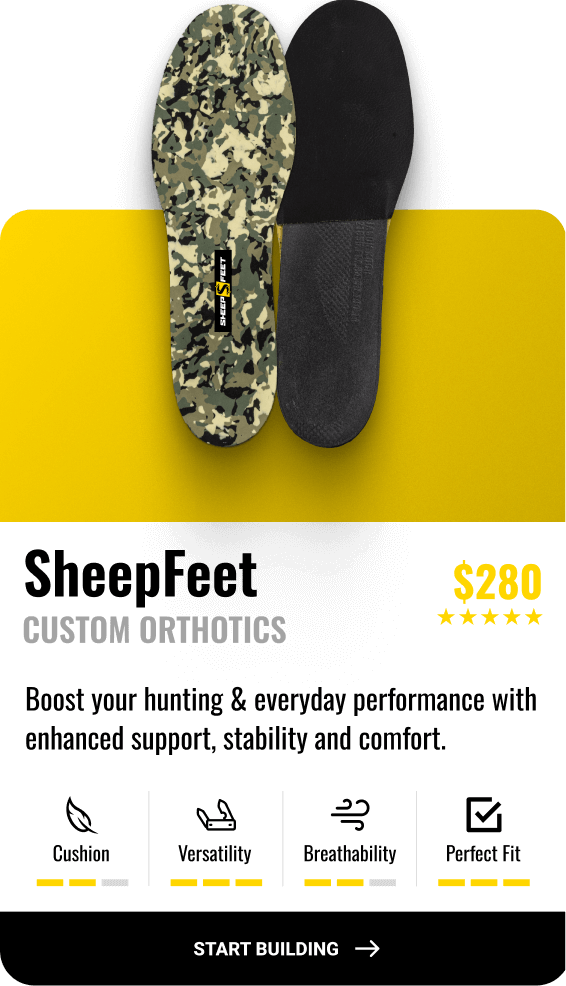
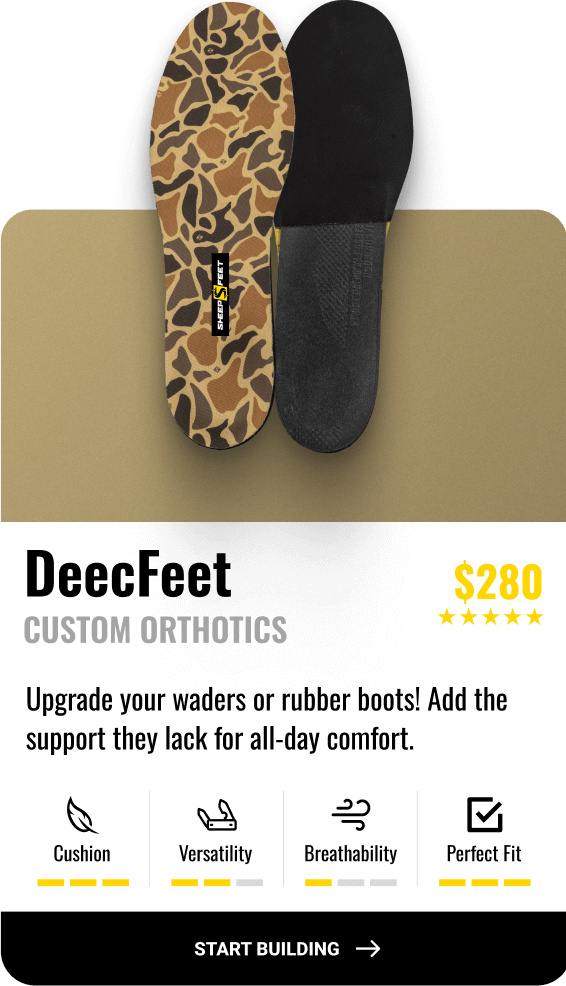
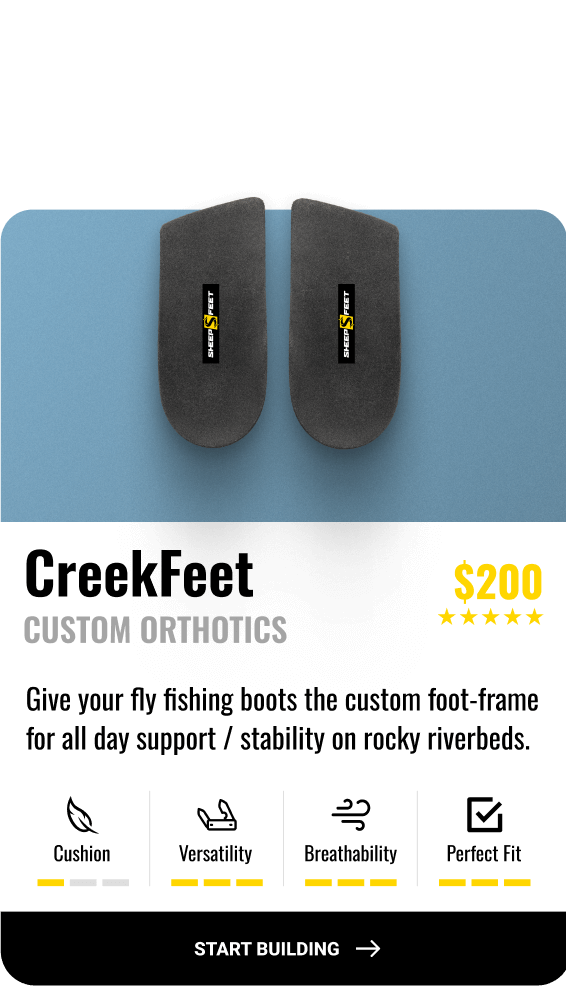
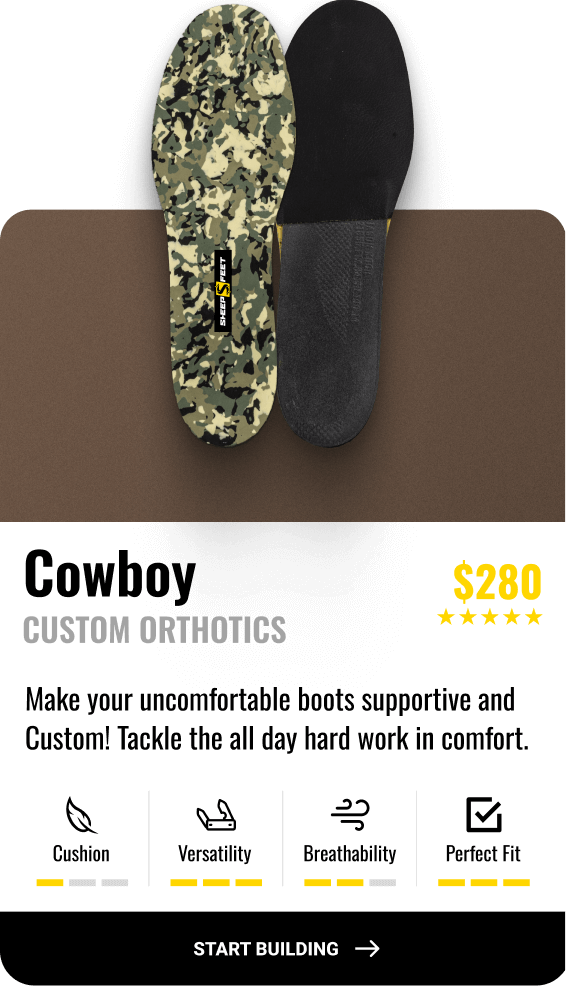
The fix is the same regardless of which boot you chose: replace the factory insole with a custom orthotic built to your specific foot. SheepFeet custom orthotics are fitted in under 10 minutes using CastDAR 3D scanning technology in the SheepFeet iPhone app, or an Impression Kit for non-iPhone users. The result is a rigid-shell orthotic built to your exact arch height and heel geometry — not a population average.
They move between boots. Your Kenetrek for early season, your Crispi for late season, your everyday boots in the off-season. Consistent support regardless of what’s on your feet. HSA and FSA eligible. Satisfaction guarantee. Made in the USA.
Best Insoles for Kenetrek and Crispi Boots
Whatever Boot You Choose — This Is the Upgrade It Needs.
SheepFeet custom orthotics fit in Kenetrek, Crispi, Schnee’s, Meindl, Zamberlan, and virtually every other hunting boot on the market.
SHOP SHEEPFEET CUSTOM ORTHOTICS →
Common Boot Buying Mistakes That End Hunts Early
-
Buying online without trying on. Elk hunting boots in the premium tier vary significantly in fit between brands and even models within the same brand. Foot width, arch height, and heel width all affect how a specific boot fits. If at all possible, try on multiple brands before buying — the boot that fits best is more important than the brand name on the tongue.
-
Skipping break-in. Pulling stiff leather boots out of the box at the trailhead is the number one way to waste a $500 purchase. Four to six weeks of progressive wear before your hunt is the minimum for stiff leather boots.
-
Buying insulation for the wrong conditions. 400g is the right call for most Western elk hunting. 1000g is for sitting in cold weather, not covering ground. Overinsulated boots on active hunting days mean sweaty feet, blisters, and misery.
-
Leaving the factory insole in. The boot is excellent. The factory insole is average. Replace it with something built for your foot.

Frequently Asked Questions
What are the best elk hunting boots for 2026?
The top elk hunting boots for 2026 are the Kenetrek Mountain Extreme (best for steep terrain and heavy pack loads), Crispi Nevada GTX (best overall and most versatile), Schnee’s Beartooth Insulated (best for cold conditions), Zamberlan Sawtooth GTX (best for late-season cold-weather performance), and Meindl Perfekt Hunter (best for high-mileage early-season hunting). The right boot depends on your terrain, season, and hunting style.
Should I replace the factory insole in my elk hunting boots?
Yes. Every premium elk hunting boot ships with a generic foam factory insole built to a population average. Under the sustained load of a multi-day backcountry elk hunt, that foam compresses and loses its arch support profile. Replacing the factory insole with a custom orthotic built to your exact foot is the single most impactful upgrade you can make to any hunting boot.
How stiff should elk hunting boots be?
Boot stiffness should match your terrain and load demands. For steep, rocky, technical mountain terrain with heavy pack loads, a stiffer boot provides better support and edging. For high-mileage early-season archery hunting on mixed terrain, a more flexible boot reduces fatigue. Match the stiffness to the actual terrain you hunt — buying the stiffest boot available regardless of terrain is a common mistake.
How long do elk hunting boots take to break in?
Quality leather elk hunting boots typically require 30 to 50 hours of wear to fully break in. Start wearing them around the house, then on local walks, then on short hikes with a loaded pack, at least four to six weeks before your hunt. Break them in with your custom orthotics already installed — the leather molds to your foot during break-in and you want the correct support structure in place from the start.
Are expensive elk hunting boots worth it?
For serious backcountry elk hunting, yes. Premium boots in the $400 to $550 range use full-grain leather and construction methods that result in boots lasting five to ten or more seasons with proper care. Amortized over five seasons, a $480 boot costs $96 per season — often less than cheaper replacements. The insole inside any boot, however, is worth upgrading regardless of boot price.
The Bottom Line
There is no single best elk hunting boot for every hunter. There’s the best boot for your terrain, your season, your foot shape, and your hunting style. What the Kenetrek does for a hunter packing into steep Colorado elk country is not what the Crispi Nevada does for an archery hunter covering 12 miles a day on varied Western terrain — and neither is what the Zamberlan does for a late-season Wyoming rifle hunter in deep November cold.
Buy the boot that matches your hunt. Break it in before opening day. And replace the factory insole with something built for your specific foot. The boot is the platform. The insole is what connects you to it.
Whatever Boot You’re In, Your Feet Deserve Custom Support.
Fitted to your exact foot. Compatible with every major hunting boot brand. HSA/FSA eligible. Made in the USA.
SHOP SHEEPFEET CUSTOM ORTHOTICS →

