

Foot Care for Healthcare Workers: The Complete Guide

You’re not on your feet all day in the way that phrase usually gets used. You’re covering 4 to 6 miles per shift on hard hospital floors — linoleum over concrete, tile over concrete, polished concrete itself — responding to call lights, running to codes, pivoting between rooms without warning, and doing it all for 12 hours straight with maybe two real breaks if you’re lucky.
That’s 20 to 30 miles per week. More weekly mileage than most recreational runners. Almost entirely on surfaces that give back nothing.
The foot care advice built for office workers who stand at a standing desk doesn’t cover this. Here’s what actually does.
What a 12-Hour Shift Actually Does to Healthcare Worker Feet
The combination of factors that make nursing specifically hard on feet is worth understanding, because most foot care advice treats all standing work as the same. It isn’t.
The mileage is real
Research consistently shows nurses walk 4 to 6 miles per shift. That’s not a slow stroll — it includes rapid walking between rooms, quick pivots, and periods of standing in one place during procedures, then immediate return to movement. The variation between static standing and rapid movement is particularly demanding on the plantar fascia and Achilles, which handle different types of load in each mode.
The floors don’t give
Hospital linoleum over concrete, hard tile, and polished concrete are among the least forgiving surfaces a foot can spend a day on. Unlike a running track, a trail, or even a wood floor with some subfloor flex, these surfaces return every pound of force directly back into your foot. Twelve hours of that with no meaningful recovery window between steps is the biomechanical reason foot injuries are so common in healthcare.
The footwear mismatch is widespread
A registered nurse who spent a decade in emergency and ICU settings described it plainly: she wore fashionable but unsupportive shoes for three months because they looked professional and matched her scrubs. The result was plantar fasciitis severe enough to require six weeks of reduced shifts and ongoing physical therapy. Research on nursing students confirms foot health status significantly impacts overall quality of life and job performance. But most nursing programs don’t include a single session on occupational foot health.
Shift structure removes natural recovery
In most physically demanding jobs, workers get meaningful recovery between loading cycles. Nurses often don’t. Breaks are inconsistent, shortened by patient acuity, or eaten by charting. The foot and lower leg never get the off-loading window that allows inflammation to clear between demands. Damage accumulates across the shift in a way that a 15-minute break in hour six doesn’t meaningfully offset.

The Foot Conditions Healthcare Workers Develop — and Why
These are occupational injuries. They’re predictable, they’re common, and they’re preventable with the right intervention. Here’s what’s actually happening in each one:
Plantar Fasciitis
The most common foot injury in healthcare workers. The plantar fascia — the connective tissue band running from heel to toes — is repeatedly overloaded without adequate structural support. Classic symptoms are stabbing heel pain with first steps in the morning or after any period of rest, arch tightness at the start of a shift, and pain that partially eases with movement but returns and builds in the back half of the shift. Left untreated, it progresses from early-stage stiffness to chronic inflammation that is present all shift, every shift.
Metatarsalgia
Ball-of-foot pain caused by excessive load on the metatarsal heads during prolonged standing and walking. Particularly common in healthcare workers who wear shoes with inadequate forefoot support or spend extended time standing in one position during procedures. Feels like a burning or aching in the ball of the foot, sometimes described as walking on a pebble that isn’t there.
Achilles Tendonitis
Achilles pain and stiffness develops in healthcare workers who alternate between periods of rapid movement and prolonged static standing — exactly the pattern of a typical nursing shift. The tendon handles different demands in each mode, and the repeated transitions without adequate recovery create cumulative micro-damage over time. Early sign: stiffness at the back of the heel during the first steps of a shift that doesn’t fully resolve.
Generalized Arch Fatigue and Flat Foot Progression
The small intrinsic muscles of the foot that maintain arch height fatigue over a long shift, especially during periods of static standing. Over months and years of inadequate support, arches that started with reasonable structure can progressively flatten, changing how load distributes across the entire foot and driving downstream knee and hip issues.
Swelling and Circulation
End-of-shift foot and ankle swelling is nearly universal in full-time healthcare workers. Static standing interrupts the muscle-pump action that returns blood and lymphatic fluid from the lower leg. Swelling itself isn’t dangerous, but it’s a direct indicator of circulatory demand that compounds the other conditions already at work. Feet that are swollen by hour eight are feet that are loading differently than they were at hour one.
“These are worth every penny. I know they don’t claim they will fix medical conditions but these have made a world of difference with my plantar fasciitis. I wear them almost every day now. The company is great to work with also.”
— Verified SheepFeet CustomerThe Complete Foot Care Guide for Healthcare Workers
This is organized into three windows: before your shift, during your shift, and after your shift. Each has specific, actionable items that make a real difference when combined consistently.
Before your shift
-
Stretch before your first step. Pull your toes back toward your shin and hold 30 seconds before getting out of bed. Repeat 3 times. The plantar fascia is at its tightest after hours of non-weight-bearing rest — pre-loading it before it takes full body weight dramatically reduces morning heel pain and sets up a better first hour of your shift.
-
Put your orthotics in before the shift, not after the pain starts. Custom orthotics or quality insoles need to be in place from step one. The structural support they provide is cumulative — wearing them from the start of the shift means your arch and heel are supported across all 12 hours, not just the last few.
-
Wear graduated compression socks. Put them on before the shift, not during. Compression socks work by maintaining venous return throughout the shift — putting them on after swelling has started is less effective than wearing them before it begins.
-
Check your footwear honestly. If your work shoes are more than 12 months old and you wear them every shift, the midsole has likely lost most of its structural integrity — even if they look fine. A shoe that looked great at hour one of your first shift doesn’t feel that way a year later, and your feet are absorbing the difference.
During your shift
-
Move when you’re standing still. Static standing is harder on feet than walking. When you’re stationary — charting, during a procedure, waiting — shift your weight from foot to foot, rise onto your toes a few times, or rock heel to toe. Each movement activates the muscle pump that returns fluid from your lower leg and gives the plantar fascia a micro-recovery cycle.
-
Use breaks for actual foot recovery, not just sitting. Elevating your feet even 10 minutes during a break reduces swelling accumulation meaningfully. A break where you sit with your feet at floor level provides rest for your legs but does little for the fluid that’s building in your feet and ankles.
-
Watch for changing pain patterns. Early-shift stiffness that eases with movement is normal. Pain that starts in the first hour and doesn’t ease, or pain that is worsening shift over shift, is a signal to address the structural cause — not push through it. Most serious foot injuries in healthcare workers are the result of months of working through early warning signs.
After your shift
-
Elevate immediately. Feet above heart level for 20–30 minutes in the first hour after your shift. This is the single most effective thing you can do to clear the swelling that built across 12 hours. Do this before you start dinner, not while you’re lying in bed about to sleep.
-
Ice if plantar fasciitis symptoms are present. Roll the bottom of your foot on a frozen water bottle for 10–15 minutes. Reduces inflammation at the fascia insertion point. Effective specifically at the end of a shift when the tissue is most inflamed.
-
Stretch your calves. Stand near a wall, place one foot behind you, press the heel down and lean forward until you feel the stretch through the calf and Achilles. Hold 30 seconds, 3 times each leg. Tight calves increase the load on the plantar fascia — this is the most direct way to reduce that tension before the next shift.
-
Moisturize and inspect. Long shifts create conditions for blisters, skin breakdown, and fungal issues between toes. A quick inspection and foot moisturizer application after your shift takes two minutes and prevents problems that would otherwise develop over weeks.

What to Look for in Healthcare Footwear
The shoe choice matters significantly, but most healthcare workers are making it based on appearance, price, or what their colleagues wear. Here’s what the clinical footwear research actually supports:
-
Firm midsole, not maximally cushioned. This is counterintuitive but consistent across podiatric recommendations. Maximally cushioned ‘cloud’ shoes feel excellent at hour one and cause plantar fasciitis by month six. Foam under sustained load compresses and loses its support profile. A firm midsole maintains its structure across the full shift and provides consistent support without collapsing.
-
Deep heel cup. The heel cup controls how much your heel moves inside the shoe. A shallow or poorly shaped heel cup allows excessive inward rolling with each step, increasing plantar fascia and Achilles strain. This is one of the most important structural features in a clinical shoe and one of the least discussed.
-
Adequate forefoot width. Feet swell across a 12-hour shift. A shoe that fits in the morning can become uncomfortably tight by hour eight if the toe box is narrow. Forefoot pressure during swelling drives metatarsalgia and toe pain that wouldn’t occur in a properly fitted wider shoe.
-
Slip resistance rated for clinical environments. Wet floors, spills, and hospital surface conditions are a real safety factor. Look for shoes with outsoles specifically rated for wet clinical surfaces, not just general slip-resistance marketing language.
-
Easy to clean. Bloodborne pathogen exposure is a real occupational reality. Shoes that can be wiped clean with a damp cloth aren’t just practical — in many facilities they’re required by infection control policy.
One critical note that applies to any shoe choice: the insole inside the shoe determines the actual biomechanical support your foot gets. The best shoe on the market paired with a flat factory footbed is still delivering generic, average arch support. The shoe is the platform. The insole connects you to it.
Why Custom Orthotics Are the Right Tool for Healthcare Workers
A custom orthotic addresses what no shoe alone and no OTC insole can: support built to your specific foot. Your arch height. Your heel geometry. Your foot’s specific pressure distribution under load.
For a healthcare worker covering 4 to 6 miles per shift, that specificity matters more than it does for someone on their feet for two hours at a retail counter. The sustained mechanical demand of a nursing shift exposes every weakness in generic support. An arch support that sits at the wrong height for your foot isn’t just uncomfortable — it’s actively not doing the job it’s supposed to do, and your plantar fascia is compensating for that failure with every step of every shift.
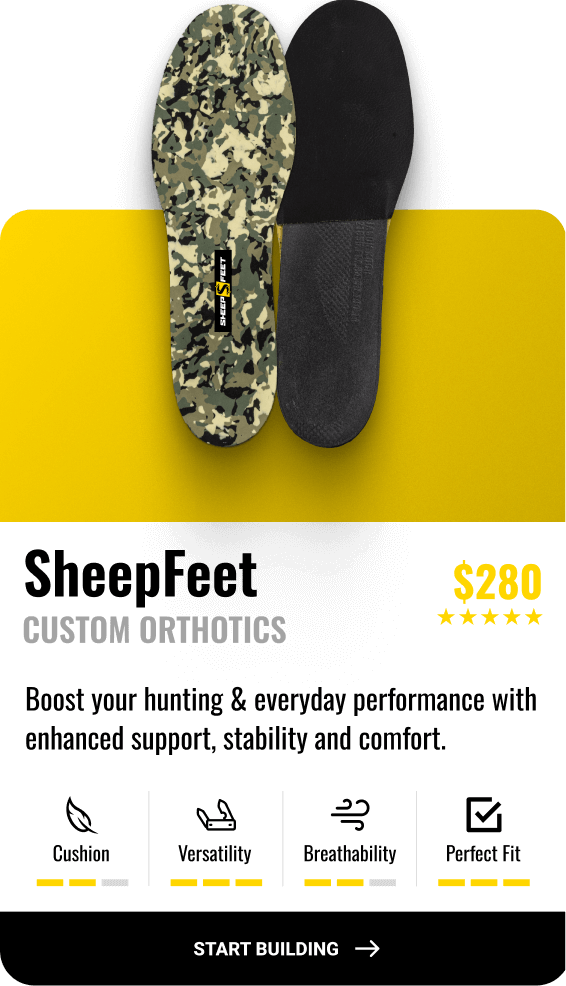
SheepFeet custom orthotics are built on a rigid shell that holds its support profile across all 12 hours — not foam that compresses by hour four. They’re fitted from a 3D scan of your foot using CastDAR technology in the SheepFeet iPhone app, or an Impression Kit if you don’t have an iPhone. The fitting takes under 10 minutes. Free adjustments until they’re right. Full refund if they can’t be. HSA and FSA eligible. Made in the USA.
How the SheepFeet Fitting Process Works
4 to 6 Miles Every Shift. Your Feet Deserve Support Built for That.
SheepFeet custom orthotics. Fitted to your exact foot. HSA/FSA eligible. Satisfaction guaranteed. Made in the USA.
SHOP SHEEPFEET CUSTOM ORTHOTICS →
When to See a Podiatrist or Physician
Most healthcare worker foot pain resolves with proper footwear, custom orthotics, and consistent care habits. See a podiatrist if:
-
Heel or arch pain is present every shift and worsening despite footwear changes over 4 to 6 weeks
-
Sharp, focal pain at one specific point that doesn’t improve with rest or changes how you walk
-
Visible swelling, redness, or a bump developing at the base of the big toe
-
Numbness, tingling, or burning sensations in the foot — these may indicate nerve involvement
-
You have diabetes, peripheral neuropathy, or circulation issues — occupational foot stress carries greater risk in these populations and should be evaluated earlier
The irony of healthcare is that the people most likely to recognize foot injury warning signs in their patients are often the last to address them in themselves. You already know what early plantar fasciitis feels like. If you’re describing your own morning heel pain to yourself in clinical terms and doing nothing about it, that’s the moment to act.
Foot Pain for Healthcare Workers: Cause and Fix
“I am currently using them in a pair of running shoes that I wear everyday at work in a hospital. I love the support they provide combined with the shock absorption of the shoes. When turkey season rolls around this spring I will swap them in to my boots to cover some ground in the mountains. Great product.”
— Verified SheepFeet Customer, Hospital Worker & HunterFrequently Asked Questions
How many miles do nurses walk per shift?
Research consistently shows that nurses walk 4 to 6 miles per shift during a standard 12-hour hospital shift, with high-acuity units like ICU and emergency on the higher end. That’s 20 to 30 miles per week for a full-time nurse — more weekly walking mileage than most recreational runners, almost entirely on hard hospital floors in footwear that is rarely optimized for that level of sustained demand.
What foot problems do healthcare workers commonly develop?
The most common foot conditions in healthcare workers are plantar fasciitis, metatarsalgia (ball-of-foot pain), Achilles tendonitis, generalized arch fatigue, and end-of-shift swelling. These conditions share a common cause: sustained mechanical load on hard surfaces without adequate structural support. They are occupational injuries, not random bad luck, and they are largely preventable with the right intervention.
Are custom orthotics worth it for nurses and healthcare workers?
Yes, for nurses covering 4 to 6 miles per shift on hard hospital floors. OTC insoles are an improvement over flat factory footbeds but are built to a population average and compress under sustained load. Custom orthotics are built to your specific arch height and heel geometry, maintaining their support structure throughout the full shift. SheepFeet custom orthotics are also HSA and FSA eligible, reducing out-of-pocket cost for nurses who already carry those pre-tax accounts.
What should nurses look for in work shoes?
The ideal nursing shoe has a firm midsole that maintains support for 8 or more hours without compression fatigue, a deep heel cup that controls heel motion, adequate forefoot width for a foot that swells across a long shift, and a slip-resistant outsole. Podiatrists specifically advise against maximally cushioned shoes with no structural support — they feel excellent at hour one and cause plantar fasciitis by month six. The insole inside the shoe ultimately determines the biomechanical support your foot gets.
How do I prevent foot pain during 12-hour nursing shifts?
The most effective prevention strategies are custom orthotics fitted to your specific foot, proper footwear with a firm midsole and deep heel cup, movement habits during the shift, a pre-shift stretching routine for the plantar fascia and calves, and post-shift recovery with foot elevation and icing where needed. Nurses who combine proper structural support with these daily habits report dramatically less foot pain than those relying on cushioning alone.
The Bottom Line
Healthcare workers are the group most likely to recognize every condition described in this article. You’ve seen plantar fasciitis in patients. You’ve explained Achilles tendonitis. You understand what metatarsalgia is and why it develops.
What’s harder is applying the same clinical rigor to your own feet — especially when the solution requires spending money on yourself rather than pushing through and managing the symptoms. But the math is simple: foot pain that limits your movement, changes your gait, and follows you home after every shift is not just a comfort issue. It’s an occupational health issue that affects your performance, your career longevity, and your quality of life off the floor.
Your patients depend on you moving well. Give your feet what they need to keep doing that.
Your Patients Need You on Your Feet. Your Feet Need Real Support.
Custom orthotics built to your exact foot. Under 10 minutes to fit. HSA/FSA eligible. Made in the USA.
SHOP SHEEPFEET CUSTOM ORTHOTICS →

