

Achilles Tendonitis in Hunters: What’s Causing It and How to Fix It

It starts as morning stiffness. A little tightness at the back of your heel when you first pull your boots on. Warms up after the first mile, so you don’t think much of it.
By day four of a seven-day elk hunt, it’s not warming up anymore. Every descent sends a sharp ache radiating up from your heel. You’re shortening your stride, favoring the other leg without realizing it, and doing the math on whether you can make it back to camp if it gets worse.
Achilles tendonitis is the injury that sneaks up on hunters because the early signs are easy to rationalize. By the time it’s obvious, you’ve already been loading a compromised tendon for days. Here’s what’s actually happening, what to do about it in the field, and how to keep it from following you into next season.
Foot Recovery After a 10-Day Hunt
What Achilles Tendonitis Actually Is
The Achilles is the largest and strongest tendon in your body, connecting your calf muscles to your heel bone. It transmits every bit of force your calf generates into the ground with each step — and on a mountain hunt, that’s a substantial amount of force, repeated thousands of times per day, for days on end.
Achilles tendonitis is what happens when that load exceeds the tendon’s capacity to absorb and recover. The result is micro-tears in the tendon fibers and inflammation of the surrounding tissue. Left unaddressed, it progresses from irritation to degeneration to, in worst cases, partial or complete rupture.
There are two distinct types that affect hunters differently:
|
Non-Insertional Achilles Tendonitis Location: Middle of the tendon, typically 2–6 cm above the heel bone Most common in: Younger, highly active hunters in their 30s and early 40s Best responds to: Eccentric calf strengthening exercises, load reduction, heel lift support |
|
Insertional Achilles Tendonitis Location: At the heel bone attachment point, at or just above the back of the heel Most common in: Hunters in their 40s and 50s; often associated with bone spurs or calcium deposits Best responds to: Heel lifts, shockwave therapy, footwear modification, orthotics |
The distinction matters for treatment. Knowing which type you’re dealing with — mid-tendon pain versus pain at the heel bone — determines what actually helps.

Why Hunting Specifically Sets Up Achilles Tendonitis
Achilles tendonitis is common in runners and military personnel for the same reason it’s common in hunters: repetitive high-demand loading over an extended period, often with an inadequate training base to match that demand. But hunting adds several specific compounding factors:
-
The mileage-to-training ratio. Most hunters aren’t putting in 8-mile days on steep terrain all year. When opening day arrives, the Achilles goes from low-demand activity to full hunting load without a progressive adaptation period. The tendon’s collagen fibers don’t adapt to new load demands quickly — they need weeks of gradual exposure to build resilience.
-
Pack weight multiplies Achilles load. Every pound of pack weight increases the force transmitted through the calf and Achilles tendon with each step. A 60-pound pack on a pack-out day can roughly double the effective load on the Achilles compared to day hiking with nothing on your back. Sustained over 8-12 miles of mountain terrain, that’s a fundamentally different demand than anything a normal fitness routine prepares for.
-
Steep descents are uniquely destructive. Downhill walking with load requires the calf to work eccentrically — contracting while lengthening to control your descent rate. This eccentric demand is significantly harder on the Achilles than uphill or flat walking. Mountain elk country’s most common terrain feature — steep descents with a loaded pack — is the specific movement pattern most likely to trigger or worsen Achilles tendonitis.
-
Overpronation shifts load asymmetrically. When the foot rolls inward excessively with each step, it creates a whipping motion in the Achilles tendon that concentrates stress on the medial fibers rather than distributing it evenly across the tendon. Over thousands of steps, this asymmetric loading accelerates tendon breakdown.
-
Boot heel height and collar fit. Hunting boots with a stiff, high collar can compress the Achilles insertion point directly — a particularly significant issue for hunters with insertional tendonitis. Boot fit that’s too loose at the heel also causes the foot to slip inside the boot, creating friction and micro-instability that adds to the Achilles’ load.
“I have always had really flat feet and as I got older it started giving me ankle pain and the SheepFeet have helped me out a lot. I rarely have ankle pain anymore.”
Recognizing Achilles Tendonitis Before It Becomes a Real Problem
The window between “early warning signs” and “actual injury that limits your hunt” is narrower than most hunters expect. Here’s how to read the progression:
Early — Act on this, don’t rationalize it:
-
Stiffness or aching at the back of the heel or mid-tendon first thing in the morning or at the start of a day’s hiking, improving after 10–15 minutes of movement
-
Mild tenderness when you squeeze the tendon between your fingers
-
A slight sensation of tightness during steep downhill sections that wasn’t there at the start of the trip
Mid-stage — Modify your plan immediately:
-
Pain that persists beyond the warm-up period and continues during activity
-
Noticeable swelling or thickening of the tendon, especially 2–6 cm above the heel
-
Pain that returns and is worse the morning after a hard day compared to the morning before it
-
Any change in how you’re walking — shorter stride, favoring the other side, avoiding heel strike
Severe — Stop and assess seriously:
-
Sharp, intense pain during a step — especially a sudden pain during a descent
-
A popping or snapping sensation at the back of the heel — this can indicate a partial or complete rupture and requires immediate evaluation
-
Significant swelling and inability to walk normally even after rest
|
⚠️ Know the difference: tendonitis vs. rupture A sudden sharp pain or audible pop at the back of the heel during activity, followed by significant weakness or inability to rise onto the toes, may indicate an Achilles rupture rather than tendonitis. This is a medical emergency. Stop activity, immobilize the foot if possible, and seek evaluation as soon as you can reach care. Do not attempt to walk it off. |
Treatment: In the Field and After
Managing Achilles tendonitis mid-hunt:
-
Reduce pack weight on remaining days where possible — every pound removed reduces the load on the tendon significantly
-
Add a heel lift: even a folded piece of moleskin or a thin pad under your heel inside the boot raises your heel slightly, reducing the angle of pull on the Achilles tendon insertion and providing immediate relief in many cases
-
Ice the tendon for 15–20 minutes at camp — the mid-tendon area for non-insertional, directly at the heel for insertional
-
Anti-inflammatories with food to manage pain and reduce acute inflammation — don’t use them to mask severe pain and push harder
-
Avoid any boot collar that presses directly on the back of the heel where the pain is — loosen the upper lacing if needed
-
Stretch your calves gently before activity: stand with your foot slightly behind you, press your heel down and lean forward — 30 seconds, 3 reps. Do not aggressively stretch through pain.
Full recovery after the season:
-
Rest from high-impact activity for at least 4–6 weeks for mid-stage cases, longer if symptoms were severe
-
Eccentric calf exercises are the most evidence-supported rehabilitation for non-insertional Achilles tendonitis: heel drops off a step, slow and controlled, 3 sets of 15 reps, once daily. Start gentle. Pain during the exercise is acceptable; sharp pain is not.
-
For insertional Achilles tendonitis, avoid aggressive downward heel drops — these can compress the insertion point and worsen symptoms. Flat-surface calf raises are better starting points.
-
If symptoms persist beyond 8–10 weeks of proper management, see a sports medicine physician or orthopedic specialist. Shockwave therapy has strong clinical support for both types of persistent Achilles tendonitis and is worth discussing.
Foot Strength Exercises for Hunters
Prevention: The Role of Support and Mechanics
The consistent thread running through Achilles tendonitis in hunters is mechanical: too much load, on a tendon that wasn’t prepared for it, in footwear that doesn’t correct the biomechanical issues making the load harder to absorb.
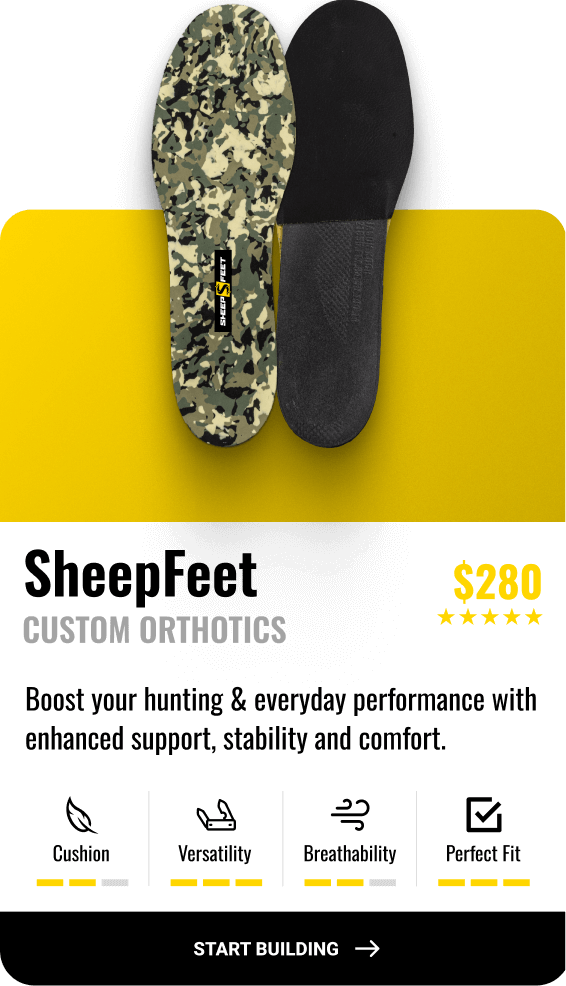
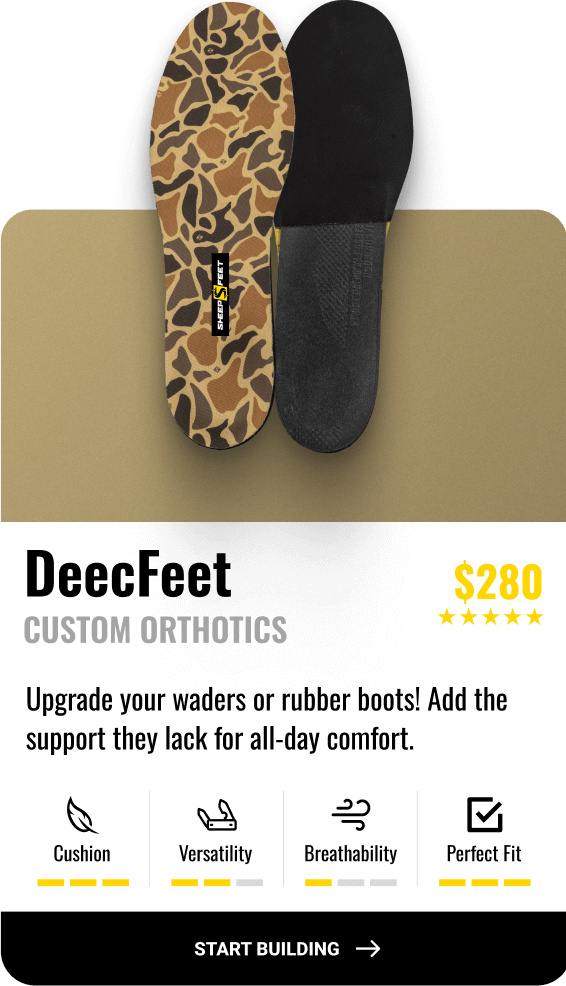
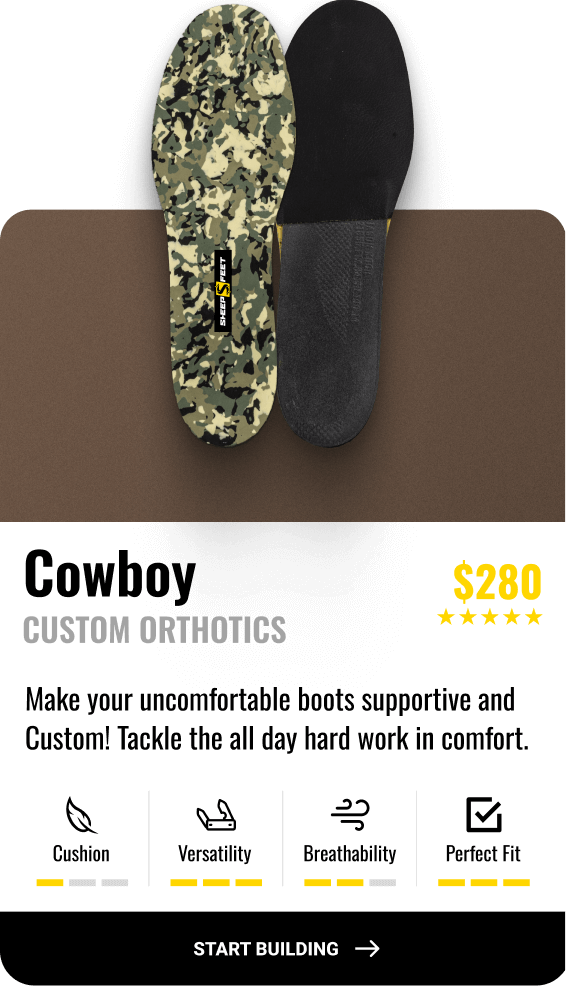
Custom orthotics address the mechanical side of that equation directly. A foot that overpronates — rolling inward with each step — places asymmetric load on the medial Achilles fibers and is a primary risk factor for tendon breakdown over extended mileage. A custom orthotic built to your specific arch height and heel geometry corrects that pronation at the source, not by fighting it with a rigid generic device, but by supporting your arch at exactly the height it needs so your foot doesn’t have to collapse into pronation to find ground contact.
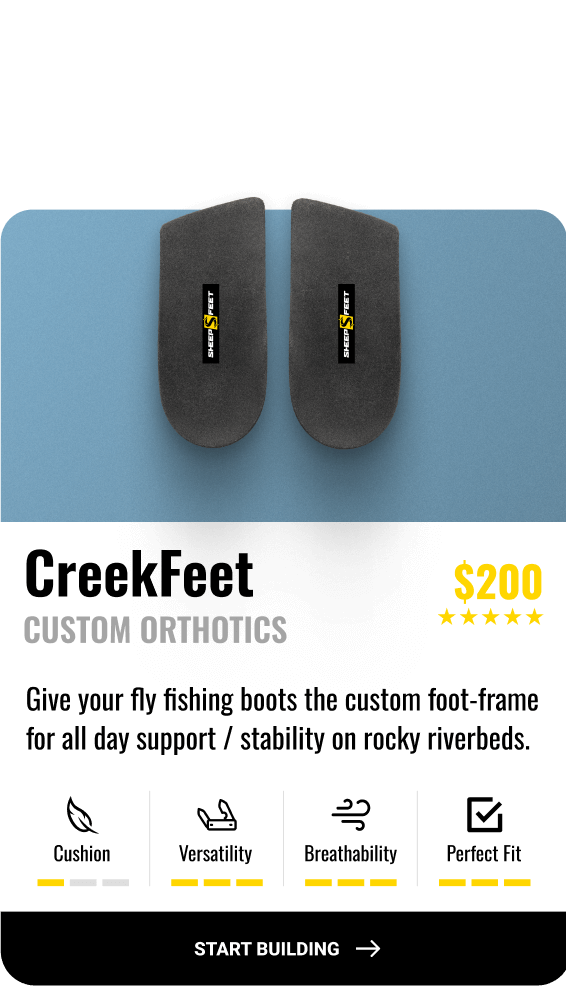
For hunters dealing with insertional Achilles tendonitis specifically, the heel cup geometry of a custom orthotic also matters. SheepFeet’s custom heel cups are built to your heel shape — which means they cradle and stabilize your heel rather than leaving it to shift inside a generic cup that may or may not match your geometry.
SheepFeet custom orthotics are fitted from a 3D scan of your foot using CastDAR technology in the SheepFeet iPhone app, or an Impression Kit for non-iPhone users. The fitting takes under 10 minutes. HSA and FSA eligible. Satisfaction guarantee — free adjustments until they’re right.
How the SheepFeet Fitting Process Works

Fix the Mechanics Before the Tendon Pays for It.
Custom orthotics built to your specific foot — correcting pronation and stabilizing your heel on every step of every mile.
SHOP SHEEPFEET CUSTOM ORTHOTICS →
Frequently Asked Questions
What causes Achilles tendonitis in hunters?
Achilles tendonitis in hunters is caused by repetitive overuse beyond what the tendon can absorb and recover from between sessions. The specific hunting factors are a sudden jump in mileage from your normal training, heavy pack weight that multiplies load on the calf and Achilles, prolonged steep descents requiring eccentric calf loading, and overpronation that concentrates stress asymmetrically on the tendon fibers.
Can I keep hunting with Achilles tendonitis?
It depends on severity. Mild Achilles tendonitis that warms up in the first 15 minutes and doesn’t worsen during activity can sometimes be managed through a trip with a heel lift, load reduction, and icing at camp. Moderate to severe pain that persists during activity or worsens day over day should not be pushed through — continuing to load a significantly inflamed Achilles risks escalating to a partial or complete tear.
How long does Achilles tendonitis take to heal?
Mild cases typically improve in 4 to 8 weeks with appropriate rest and eccentric strengthening. Moderate cases can take 3 to 6 months. Insertional Achilles tendonitis tends to take longer and may require additional interventions like shockwave therapy in persistent cases. The most common reason for prolonged recovery is returning to full activity too quickly.
Do custom orthotics help with Achilles tendonitis?
Yes. Custom orthotics address two primary mechanical contributors: overpronation and heel positioning. Correcting excessive inward rolling reduces asymmetric Achilles loading with every step. For insertional tendonitis specifically, a heel lift built into the orthotic reduces the angle of pull on the tendon at the insertion point, directly offloading the area of irritation.
What is the difference between insertional and non-insertional Achilles tendonitis?
Insertional Achilles tendonitis affects the tendon’s attachment point at the heel bone, presenting as pain at the back of the heel. It’s more common in hunters in their 40s and 50s and often involves bone spurs. Non-insertional affects the middle tendon fibers 2–6 cm above the heel, more common in younger active hunters. Treatment differs: insertional responds better to heel lifts and shockwave therapy, non-insertional responds well to eccentric calf exercises.
The Bottom Line
Achilles tendonitis doesn’t show up because you’re out of shape. It shows up because you asked a tendon to do more than it was prepared for, in footwear that didn’t help it do the job, on terrain that’s harder on that tendon than anything else you do all year.
Catch it early and it’s a minor inconvenience. Ignore the warning signs into mid-stage and it becomes a multi-week recovery. Push through severe pain and you’re looking at a potential rupture and a surgery that sidelines you for six months or longer.
Read the signals. Give it the support it needs. And before next season, address the mechanics that made it vulnerable in the first place.
Your Achilles Does the Work. Give It the Support to Last the Season.
SheepFeet custom orthotics. Correcting the mechanics that lead to Achilles tendonitis before they become a problem.
SHOP SHEEPFEET CUSTOM ORTHOTICS →


