

Shin Splints from Hiking: What Causes Them and How to Make Them Stop

It starts as a dull ache along the front of your shin somewhere around mile six. By mile nine it's a deep, throbbing pain that doesn't go away even when you stop to rest. You tell yourself it's just fatigue. By day three of a multi-day hunt, every downhill step sends a jolt up the front of your leg, and you're rationing your mileage just to keep moving.
That's a shin splint — medically known as medial tibial stress syndrome — and it's one of the most common overuse injuries that quietly ends hunts early. It's also one of the most preventable, once you understand what's actually causing it.
What's Actually Happening When You Get Shin Splints
Shin splints are repetitive stress damage to the tibia and the muscles and connective tissue that attach to it — specifically the tibialis posterior, soleus, and flexor digitorum longus. Every step you take, especially downhill or on uneven ground, transmits force up through your foot and ankle into your shin. When that force exceeds what your shin and surrounding tissue can absorb and recover from between steps, you get microtrauma — a stress reaction in the bone's outer layer and inflammation in the surrounding muscle and tendon.
It's a true overuse injury. It's not a single bad step — it's thousands of steps that each add a small amount of damage faster than your body can repair it.
Why Hunters and Hikers Get Shin Splints Specifically
Shin splints show up disproportionately in people who suddenly increase mileage, elevation gain, or load — which describes almost every hunting season for almost every hunter. You spend most of the year walking on flat ground in regular shoes, then suddenly you're covering eight miles a day on uneven mountain terrain with thirty to sixty pounds on your back. That mismatch between your training base and your hunting demand is the single biggest driver.
- Sudden mileage or elevation jump. If your training all year topped out at three flat miles and opening week throws you into eight miles of steep terrain, your shins haven't built the capacity to absorb that load. This is the single most common cause in hunters.
- Pack weight. Every additional pound on your back increases the impact force transmitted through your shin with every single step. A 60-pound pack on a multi-day elk hunt dramatically increases the cumulative load compared to day hiking with a light pack.
- Worn-out or unsupportive footwear. Insoles that have lost their shock-absorbing structure — or boots that never had adequate support to begin with — mean more of that impact force reaches your shin instead of being absorbed at the foot and ankle level.
- Overpronation. If your foot rolls inward excessively with each step, it changes the angle of force transmission up your leg and increases stress specifically on the tibialis posterior muscle, a primary contributor to shin splint pain.
- Downhill mechanics. Steep descents — the exact terrain most elk and mule deer hunts demand — place dramatically more eccentric load on the lower leg than flat walking or climbing. This is frequently the specific terrain where hunters first notice shin pain developing.

“I don't mess around when it comes to my feet. The SheepFeet insoles are the real deal. They lock your heel in, support the arch properly, and actually reduce fatigue instead of just adding cushion. That's the difference. Cushion is soft — support is strength.”
— Verified SheepFeet CustomerTreating Shin Splints — In the Field and After
The good news: shin splints almost always heal on their own. The bad news: only if you actually let them, which is the part most hunters skip mid-season.
If you're mid-hunt and shin pain develops:
- Reduce mileage and pack weight where possible for the remainder of the trip — don't push through sharp or worsening pain
- Ice the area for 15–20 minutes when you're back at camp, as often as you can manage
- Take anti-inflammatories with food if needed to manage pain, not to mask it and push harder
- Tape or compress the area if you have supplies — light compression can reduce discomfort during continued movement
- Watch for warning signs of a stress fracture: sharp, focal pain at one specific point that doesn't fluctuate and gets worse with continued activity — if this develops, stop and reassess your plan for the rest of the trip
Once you're home, for full recovery:
- Rest from high-impact activity for 2–4 weeks depending on severity — most mild cases resolve in this window
- Cross-train with low-impact activity (cycling, swimming) to maintain fitness without reloading the injury
- Gradually reintroduce hiking mileage rather than jumping back to your pre-injury distance immediately
- Address the root cause — footwear, pack weight management, or training base — before next season, or the same injury repeats
Prevention: What Clinical Research Actually Supports
Medical research on shin splints is clear about one thing: no single prevention method works for everyone, and a combination approach works best. But one specific intervention shows up consistently across the research as genuinely effective — supportive, shock-absorbent insoles, particularly ones that correct overpronation.
That matters because it's the one prevention factor most hunters never address. They train, they build mileage gradually, they break in their boots — and they leave the factory insole untouched, which is often the weakest link in the entire chain between your foot hitting the ground and the force reaching your shin.
- Build mileage gradually. If hunting season is your only high-mileage activity all year, start hiking 8–12 weeks out and build distance and elevation gain incrementally rather than jumping straight to opening-week mileage.
- Address overpronation specifically. If your foot rolls inward excessively, a generic insole won't correct it consistently. This requires support built to your specific foot mechanics — which is the entire premise behind a custom orthotic.
- Manage pack weight progressively. Train with weighted packs in the weeks leading up to season so your shins adapt to the additional load before opening day, rather than encountering it for the first time on the mountain.
- Replace footbeds before they fail. A compressed, worn-out insole has lost the shock absorption it had when new — which means more impact force reaches your shin with every step, even though the boot looks and feels fine.
Why Support Matters More Than Most Hunters Realize
Here's the connection clinical research keeps coming back to: shin splints are fundamentally about how much force reaches your shin with every step, and how well your foot and ankle absorb and redirect that force before it gets there. A foot that's overpronating, or sitting in a flat factory insole with no real arch support, is sending more of that force straight up your leg.
A custom orthotic built to your specific arch height and heel geometry does two things a generic insole can't: it corrects pronation issues precisely because it's built to your actual foot mechanics, not an average, and it maintains its shock-absorbing structure under the sustained heavy load of a multi-day hunt rather than compressing flat by day three.
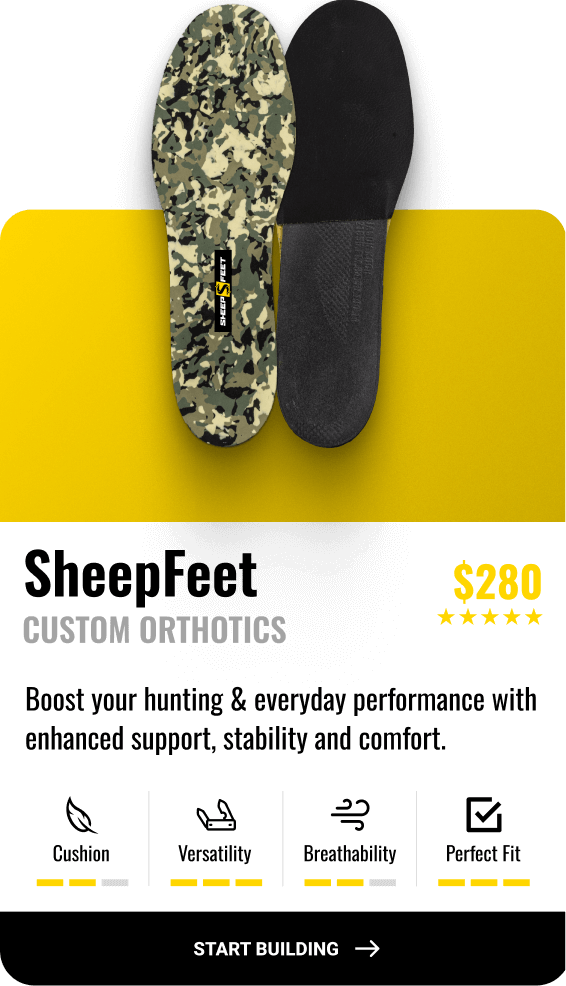
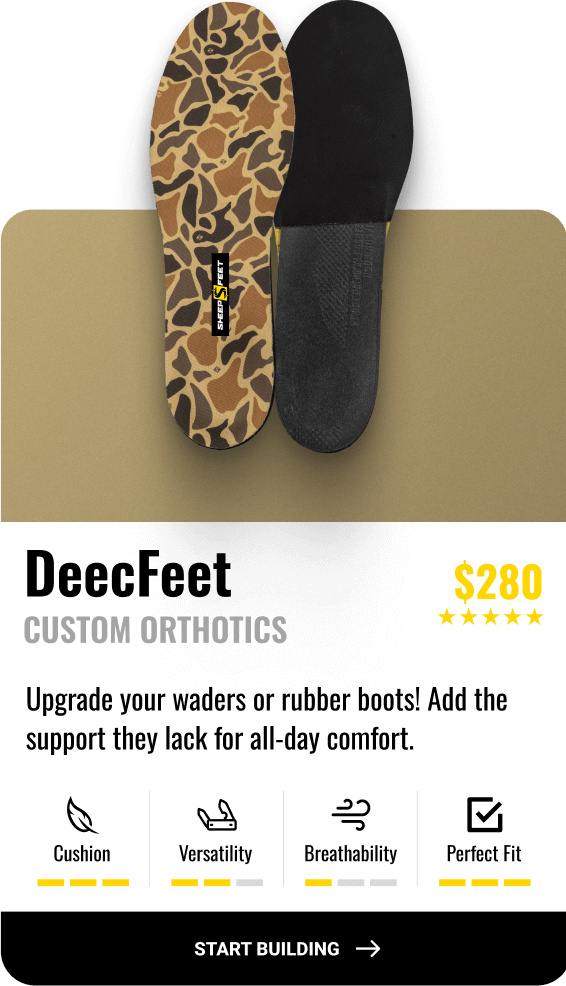
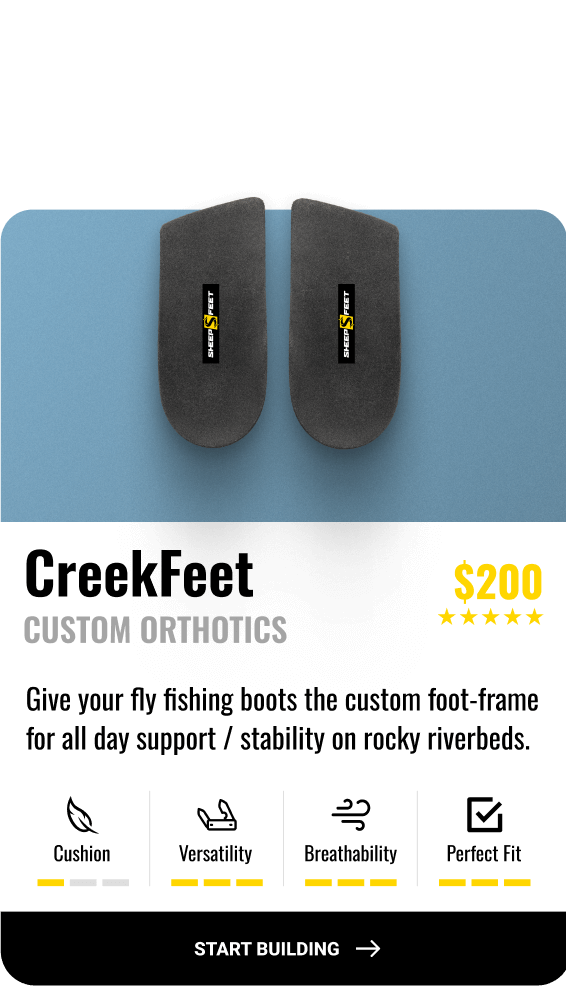
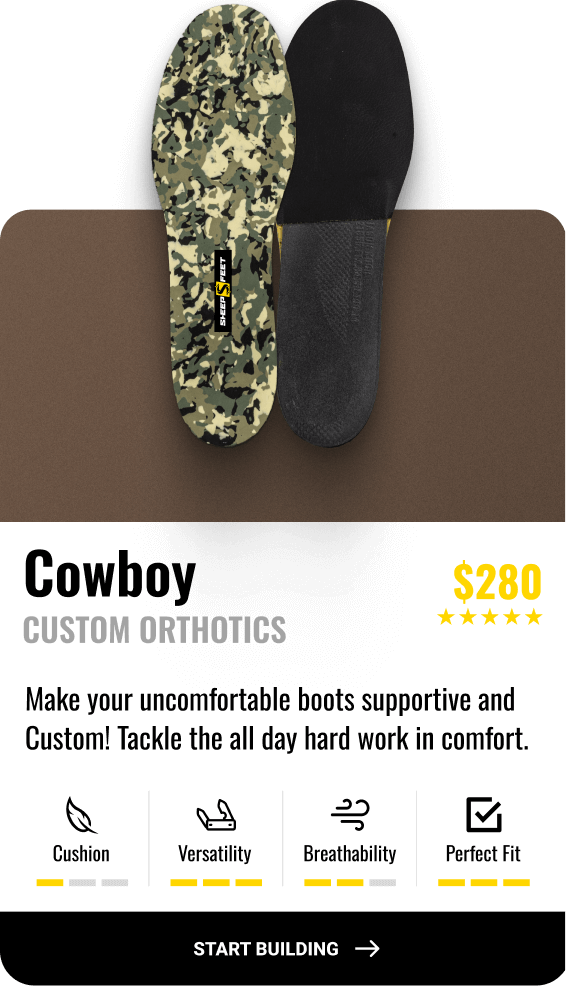
SheepFeet custom orthotics are built from a 3D scan of your foot using CastDAR technology in the SheepFeet app, or an Impression Kit if you don't have an iPhone. The fitting takes less than 10 minutes, and what comes back is support built to your exact foot — not a population average that may or may not match how your foot actually loads.
How the SheepFeet Fitting Process Works

Stop the Stress Before It Becomes an Injury.
SheepFeet custom orthotics correct pronation issues at the source and hold their shock-absorbing structure all season long.
SHOP SHEEPFEET CUSTOM ORTHOTICS →Frequently Asked Questions
What causes shin splints while hunting and hiking?
Shin splints, medically known as medial tibial stress syndrome, are caused by repetitive stress on the shin bone and surrounding muscles and tendons. For hunters, the main triggers are a sudden jump in mileage or elevation gain compared to your normal training, carrying heavy pack weight that increases impact force with every step, worn-out or unsupportive boots and insoles, and overstriding or poor downhill mechanics on steep terrain.
How long do shin splints take to heal for hunters?
Mild shin splints typically improve within 2 to 4 weeks of reduced load and proper treatment. More significant cases can take 4 to 8 weeks, especially if a hunter pushes through pain and continues high-mileage activity. The most important factor in recovery time is how early you address it.
Can custom orthotics help prevent shin splints?
Yes. Supportive insoles, including custom orthotics, are one of the most consistently supported prevention strategies for shin splints in clinical research. Shin splints are frequently linked to overpronation and inadequate shock absorption — both of which a properly fitted orthotic addresses directly.
Should I keep hunting through shin splint pain?
No. Continuing high-impact activity through shin splint pain is the biggest factor in turning a 2-to-4-week recovery into an 8-week or longer recovery, and in rare cases, progressing to a tibial stress fracture. Reduce mileage and pack weight, ice the area, and don't push through sharp or worsening pain.
What's the difference between shin splints and a stress fracture?
Shin splints typically present as diffuse, dull pain along a broader section of the shin that's worse after activity and improves with rest. A stress fracture usually presents as a more focal, sharp pain at a specific point that can occur during activity and worsens progressively. If pain is sharply localized and doesn't improve with rest, get it evaluated.
The Bottom Line
Shin splints aren't bad luck and they're not a sign you're out of shape. They're a predictable mechanical response to load exceeding what your shin and lower leg can currently absorb — and the single most overlooked factor in that equation is what's happening at your foot before the force ever reaches your shin.
Build your mileage gradually. Manage your pack weight. And give your foot the kind of support that actually corrects the mechanics causing the problem, not just cushions the symptom.
Built to Correct the Mechanics, Not Just Cushion the Pain.
Custom orthotics fitted to your exact foot. Made in the USA. Satisfaction guaranteed.
SHOP SHEEPFEET CUSTOM ORTHOTICS →

