

Best Insoles for Roofers and Construction Workers

Most insole recommendations for tradespeople are written by people who've never spent a day on a roof. They recommend cushioned gel inserts designed for walking and light standing -- products that compress into a useless foam layer within weeks of roofing use and provide nothing by hour six of a ten-hour day.
Roofers and construction workers don't need cushion. They need structural support that holds up under the specific punishment of their job -- sloped surfaces, ladder climbing, heavy material carries, and unforgiving substrates underfoot. Those demands eliminate most of what's on the shelf before the conversation even starts.
This guide covers what roofing and construction actually do to your feet, why generic insoles fail under those conditions, and what actually works for tradespeople who need to function at full capacity every day of the work week.
“I don’t mess around when it comes to my feet. Between long work days, time on the range, hiking, and training, if my feet aren’t right, nothing else is. The SheepFeet insoles are the real deal. They lock your heel in, support the arch properly, and actually reduce fatigue instead of just adding cushion. Cushion is soft — support is strength. These give you both. After long days on concrete and uneven ground, I’ve noticed way less foot soreness and less overall leg fatigue.”
— Verified SheepFeet Customer
What Roofing and Construction Actually Do to Your Feet
The foot damage from trades work doesn't come from any single thing. It comes from a combination of demands that compounds throughout the day and across the week -- and that most insoles were never designed to handle.
Sloped Surface Loading
Standing on a pitched roof puts your foot in a constant dorsiflexed position -- toes higher than heel, or heel higher than toes depending on your position on the slope. Neither position is what your arch was designed to sustain for hours. The plantar fascia is under continuous tension in a way it isn't on flat ground, and the loading shifts to the ball of foot and heel in alternating patterns that concentrate pressure rather than distributing it.
Ladder Climbing Load
Every ladder climb loads your forefoot under your full body weight, often with tools or materials added on top. A roofer making 20-30 ladder climbs per day is putting thousands of concentrated forefoot loading reps through their feet -- a pattern that no standard foam insole was designed to support repeatedly.
Hard Surface Fatigue
Concrete, plywood decking, and asphalt shingles have one thing in common: zero give. Every step transfers impact force directly to your foot with no absorption from the surface. Over 10 hours, that adds up to thousands of unabsorbed impacts. Foam insoles compress early in the day and provide diminishing shock absorption through the afternoon. By hour eight, most generic insoles are essentially flat.
Load Carrying
Carrying bundles of shingles, sheets of plywood, or buckets of materials amplifies the force through your feet with every step. A 50 lb shingle bundle on a ladder on a 6:12 pitch creates loading forces that most insoles were never tested under -- and they show it by the end of the first month.
No Seated Recovery
Office workers sit. Roofers don't. Eight to twelve hours of continuous standing and active work with no meaningful off-loading period means the plantar fascia, arch musculature, and heel tissue never get the recovery window they need to clear inflammation between loading cycles. This is why foot pain in tradespeople compounds week over week rather than resolving on weekends alone.
Why Generic Insoles Fail Tradespeople
Generic insoles -- including quality over-the-counter options like Superfeet and Powerstep -- are engineered for a different use case. They're tested for walking and light standing, not for sustained heavy loading on unforgiving surfaces for 10-hour days, five days a week, 50 weeks a year.
The Compression Problem
Every generic insole is built around a foam layer. Foam compresses under sustained load. A foam insole that tests well in the morning provides a fraction of that support by mid-afternoon under trades work conditions. The compression isn't visible -- the insole still feels present -- but the arch support it was providing is gone. What's left is a thin, flat layer between your foot and the boot sole.
The Fit Problem
Generic insoles are designed for an average foot. If your arch height, heel width, and pressure distribution happen to match the product's design assumptions, they work acceptably. Most feet don't match. The mismatch is tolerable for light use. Under trades conditions -- high loading, long duration, five days a week -- that mismatch becomes chronic foot pain, plantar fasciitis, and early joint fatigue in the knees and hips.
The Durability Problem
Most generic insoles are rated for 6-12 months of typical use. Typical use is not roofing. Under trades conditions, quality OTC insoles often lose meaningful support within 2-4 months of daily heavy use. Replacing them twice a year costs $100-$150 annually and still leaves you with an insole that's never custom-fitted to your foot.

What Tradespeople Actually Need From an Insole
The requirements for an insole that performs under roofing and construction conditions are specific and non-negotiable:
-
Structural support under load: Arch support that maintains its height under sustained heavy loading -- not foam-dependent support that compresses within hours
-
Custom heel stabilization: A deep heel cup fitted to your specific heel geometry -- not a generic cup that allows heel movement on sloped surfaces
-
Full-length construction: Full-length coverage from heel to toe -- partial insoles leave the forefoot unsupported exactly where ladder climbing concentrates load
-
Long-term durability: Durable construction rated for years of daily heavy use -- not months
-
Individual fit: A support structure built for your specific foot -- not the average foot of a statistical sample
The only product category that meets all five requirements is custom orthotics built from a scan of your specific foot. Everything else -- gel inserts, foam OTC options, heat-molded insoles -- meets some of these requirements partially but fails under actual trades conditions where all five matter simultaneously.
“Man these things really work. My right heel pain was getting pretty bad. Have done several weighted hikes with no pain. I put them in my everyday shoes as well. I’m on my feet all day most days. No discomfort.”
— Verified SheepFeet Customer
|
Built for People Who Work Hard on Their Feet SheepFeet custom orthotics are fitted to your specific foot using CastDAR technology -- no appointment required. Structural support that holds up under the demands of real work. |
Insole Options for Tradespeople: Ranked Honestly
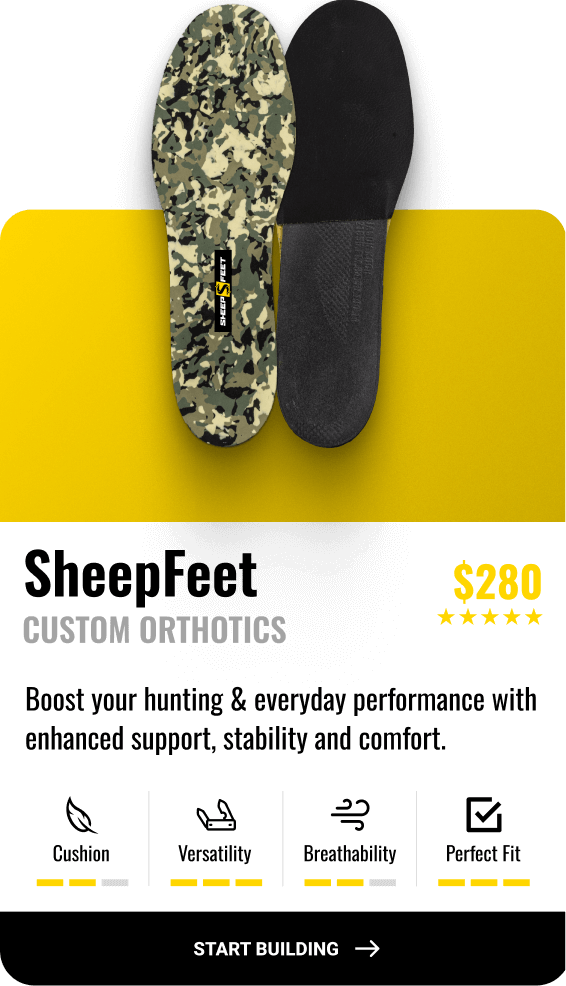
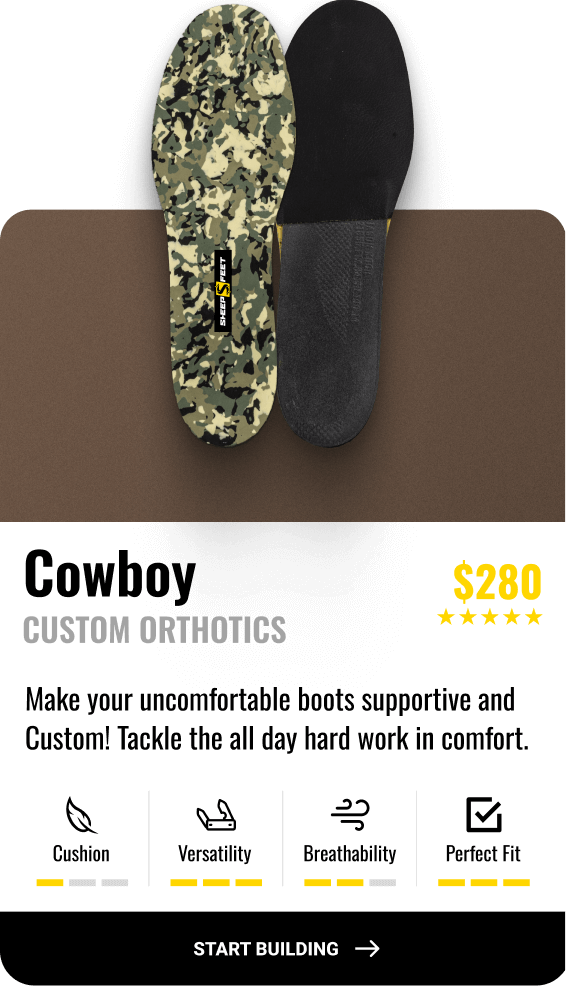
#1: SheepFeet Custom Orthotics -- Best for Heavy Trades Use
Best for: Roofers, framers, concrete workers, and any tradesperson on their feet 8-12 hours daily under heavy load conditions.
Why it wins: Built from a scan of your specific foot using CastDAR technology. Maintains arch support under sustained heavy loading. Custom heel cup stabilizes the heel on sloped surfaces.
3-5 year lifespan with daily work boot use. $280 amortized = $56-93 per year -- comparable to annual OTC replacement, with the performance advantage of custom fit and structural durability.
Trade-specific advantage: SheepFeet orthotics were designed for people whose feet take a sustained pounding in demanding physical conditions. The same properties that make them perform for backcountry athletes make them the right choice for tradespeople.
#2: Superfeet Green -- Best Over-the-Counter Option
Best for: Tradespeople with a high arch who need a quality OTC option, or those building toward custom orthotics.
Why it works: The nylon stabilizer cap provides more structure than pure foam options. The deep heel cup helps with heel positioning. Better than factory insoles and most gel alternatives.
Limitation: Designed for an average high-arch foot. Foam layer compresses under sustained trades loading within 3-6 months of daily heavy use. Annual replacement required.
#3: Powerstep Pinnacle -- Good Alternative for Medium Arches
Best for: Tradespeople with medium arch height who find Superfeet too rigid.
Why it works: More flexible construction suits a wider range of foot shapes. Reasonable arch support for light to moderate trades work.
Limitation: Softer construction than Superfeet loses support profile faster under heavy trades conditions. Not suitable for high-intensity roofing or heavy material handling.
#4: Factory Boot Insole -- Not Recommended
What it does: Fills space inside the boot. Provides basic cushion for the first few days of wear.
Why it fails: No meaningful arch support. Compresses to nothing within weeks of heavy use. Every work boot manufacturer ships the cheapest acceptable insole. Remove and replace before your first day on the job.
|
💡 The most important insole decision you can make today If you're wearing the factory insole that came with your work boots, you're working without arch support. Pull it out right now and look at it -- it's a thin piece of foam with no structural properties. Every hour you stand on a roof with that insole is an hour your plantar fascia is doing support work it shouldn't have to do alone. Even Superfeet is a significant upgrade over factory insoles. Custom orthotics are the right answer. But anything is better than factory. |
Work Boot Compatibility
SheepFeet custom orthotics work with most major work boot brands. The process is the same regardless of boot brand: remove the factory insole and install the custom orthotic. A few things to know:
-
Boot volume: If your boots feel tight after installing a custom orthotic, the orthotic is adding 3-5mm of height. You may need a half-size larger boot going forward -- worth accounting for when purchasing new work boots
-
Removable insoles: Work boots with a removable insole (most modern work boots) accept custom orthotics easily. Boots with a sewn-in insole may require modification
-
Safety toes: Steel-toed and composite-toed boots both work with custom orthotics -- the toe cap doesn't affect the insole fit in the heel and arch area
-
Multi-boot use: Run your orthotics in your daily work boots and a separate pair of athletic shoes or everyday shoes -- many tradespeople purchase two pairs to avoid swapping
🔗 How the Sheepfeet Fitting Process Works
🔗 Are Custom Orthotics Worth It for Hunters?

Frequently Asked Questions
What are the best insoles for roofers?
The best insoles for roofers are custom orthotics fitted to their specific foot. Roofing demands -- sloped surface loading, ladder climbing, heavy material carries, and 10-hour days on hard surfaces -- cause generic insoles to compress and fail within months. SheepFeet custom orthotics maintain their structural support under these conditions and are built to your specific foot rather than a population average.
Why do roofers get foot pain?
Roofers develop foot pain from sustained standing on sloped hard surfaces, repeated ladder climbing that concentrates load on the forefoot, carrying heavy materials that amplify loading forces, and 8-12 hour days with no seated recovery time. Without structural arch support that holds up under these conditions, the plantar fascia and arch musculature fatigue and develop chronic inflammation.
Do custom orthotics help with foot pain from roofing?
Yes. Custom orthotics address the structural root cause of foot pain in roofers -- the mismatch between the demands of the job and the support provided by generic insoles. Most tradespeople who switch to custom orthotics report significant improvement in foot and lower leg fatigue within the first weeks of use.
Are custom orthotics worth it for construction workers?
Yes. At $56-$93 per year amortized over 3-5 years of daily work boot use, SheepFeet custom orthotics cost roughly the same as annual OTC insole replacement -- with the performance advantage of custom fit and structural durability. For anyone spending 8-12 hours per day on their feet in demanding physical conditions, the investment typically pays back in reduced fatigue and injury risk within one season.
What is the best insole for standing on concrete all day?
The best insole for sustained concrete standing is a custom orthotic on a rigid or semi-rigid shell. Concrete's zero-give surface transfers every impact force directly to the foot. Foam insoles compress under sustained concrete standing and provide decreasing support throughout the day. A custom orthotic maintains its arch support structure through a full shift.
How do I get SheepFeet custom orthotics for work boots?
Download the SheepFeet app and scan your feet using CastDAR technology on your iPhone, or order the SheepFeet Impression Kit if you don't have an iPhone. No appointment required. Ships to your door. Install by removing the factory boot insole and placing the custom orthotic inside.
The Bottom Line
|
BOTTOM LINE Your feet are your livelihood. The insole inside your work boot determines whether they're supported through a ten-hour day or breaking down by lunch. Generic insoles aren't built for what you do. Custom orthotics fitted to your specific foot are. |
The tradespeople who stay productive and pain-free over a long career aren't the toughest ones. They're the ones who stopped treating foot pain as an occupational hazard and started treating it as a solvable problem. It is. The fix takes ten minutes from your phone.
Built for People Who Work Hard on Their Feet
SheepFeet custom orthotics are fitted to your specific foot using CastDAR technology — no appointment required. Structural support that holds up under the demands of real work.
SHOP SHEEPFEET CUSTOM ORTHOTICS →

