

Custom Orthotics for Nurses with Plantar Fasciitis: Why Your Shift Is the Problem

You felt it this morning before you even got out of bed. That sharp, stabbing pain in your heel the moment your foot hit the floor. You stretched it out, walked it off, told yourself it would loosen up once you got moving.
By hour six of your shift, it was back. By hour ten, every step on the tile felt like someone was driving a nail into your heel.
That’s plantar fasciitis. And if you’re a nurse, you’re getting it for a very specific reason that has nothing to do with weak feet or bad luck.
Best Insoles for Nurses Standing 12-Hour Shifts
Why Nurses Get Plantar Fasciitis at Higher Rates Than Almost Anyone Else
The plantar fascia is a thick band of connective tissue running from your heel bone to the base of your toes. It supports your arch and absorbs shock with every step. When that tissue is repeatedly overloaded without enough time to recover, it develops micro-tears. Those tears inflame — and that inflammation is plantar fasciitis.
Nurses create the exact conditions for plantar fasciitis in three specific ways that most people in other professions never experience simultaneously:
- Hard floors with no give. Hospital tile, polished linoleum, and concrete have almost zero shock absorption. Every step sends impact directly up through your heel and into the plantar fascia. Eight to twelve hours of that, five days a week, is cumulative mechanical damage that adds up fast.
- No real rest during the shift. Most office workers sit for significant portions of their day. Nurses don’t. You’re on your feet and moving for the bulk of every shift, often without a seated break until hour four or five. The plantar fascia never gets a genuine off-loading window to recover between loading cycles.
-
Footwear designed for appearance, not biomechanics. Most nursing clogs and work shoes are chosen for slip-resistance, waterproofing, and ease of cleaning — not for the kind of structural support that protects a foot under 12 hours of sustained loading on hard floors. Many have flat, generic footbeds that provide zero meaningful arch support.
The result is a predictable mechanical failure: the plantar fascia is asked to provide structural support that should be coming from the shoe and insole, and eventually, it can’t keep up.

The Warning Signs Nurses Miss — Because the Shift Never Stops
The deceptive thing about plantar fasciitis is that it actually feels better once you’ve been moving for a while. That’s not healing — it’s increased blood flow masking the pain signal. The tissue is still damaged. And every hour you’re on your feet without proper support, the damage compounds.
Early stage — easy to rationalize:
- Heel pain with your first steps in the morning, fades after a few minutes
- Tenderness at the bottom of the heel when you press on it
- Arch stiffness after sitting at the nurses’ station for an extended stretch
- Foot feels tight at the start of a shift, loosens up after an hour
Mid stage — your feet are now limiting your work:
- Morning heel pain that takes 20–30 minutes or more to ease
- Sharp pain when you stand after charting at the station
- Pain returns and builds during the back half of every shift
- You’re changing how you walk without realizing it — favoring one foot
Late stage — this is now a clinical problem:
- Constant heel pain that doesn’t ease with movement
- Pain during normal walking between rooms
- Swelling near the heel
- Pain radiating into the arch or up toward the ankle
- Any sudden sharp pain mid-stride — this can indicate a partial tear and requires immediate rest
Most nurses push through the early and mid stages. By the time they’re in late stage, they’ve usually been dealing with it for months, and the recovery timeline has stretched from weeks to six months or longer.
What Nurses Try That Doesn’t Fix It — And Why
Nurses are problem-solvers. Most have already tried several things before they find a real solution. Here’s an honest look at what helps and what doesn’t:
- Gel heel cups: Add cushion at the point of pain. Cushion and support are not the same thing. Cushion compresses under load — after a few hours on a hard floor, a gel heel cup has mostly flattened out and is providing a fraction of the relief it did at the start of the shift. It also doesn’t address the arch mechanics that are causing the problem.
- OTC insoles (Superfeet, Dr. Scholl’s): A real improvement over flat factory footbeds. These provide some structure and arch support, and for nurses with mild or early-stage plantar fasciitis, they can slow the progression. The limitation is that they’re built to an average arch — not yours. If your arch height and foot shape match the average, they work reasonably well. If they don’t, you get partial support at best.
- Better shoes alone: Important, but not sufficient. A more supportive shoe reduces the problem but doesn’t solve it. The shoe’s footbed is still a generic fit, and the insole you put inside it determines the actual biomechanical support your foot gets.
- Rest: Your feet improve when you’re off for three days, then the cycle restarts when you go back. Rest allows healing, but the moment you return to the same unsupported environment, the damage begins accumulating again from day one.
- Stretching and massage: Genuinely helpful for symptom management and keeping the fascia pliable. Not a fix for the underlying structural problem. Nurses who only stretch are managing plantar fasciitis — not ending it.

What Actually Works: The Structural Fix for Nurses
The root cause of plantar fasciitis in nurses is structural: the plantar fascia is doing arch support work that should be handled by the insole. The only fix that addresses that root cause is giving it the support it needs — specifically, a custom orthotic that matches your foot’s exact arch height, heel shape, and pressure distribution.
This is different from what most nurses have tried before. A custom orthotic isn’t a thick foam insert. It’s a rigid or semi-rigid shell built from a scan or mold of your specific foot. It holds your foot in its correct biomechanical position throughout the entire stance phase — from heel strike to toe-off. That means:
- Your arch is actively supported at the exact height yours sits at, not a statistical average
- Your heel is stabilized, which prevents the inward roll (overpronation) that strains the fascia insertion point at the heel
- Load is distributed across the full foot rather than concentrating at the heel and arch
- The plantar fascia can begin to heal because it’s no longer being asked to provide structural support with every step
For nurses specifically, there’s one more factor that makes custom orthotics the right tool: they move with you. You put them in your work shoes, your running shoes, your casual shoes on your days off. Unlike a specific shoe, they work in whatever you’re wearing — so your feet get consistent structural support across your full day, not just during part of it.
“I am currently using them in a pair of running shoes that I wear everyday at work in a hospital. I love the support they provide combined with the shock absorption of the shoes. When turkey season rolls around this spring I will swap them in to my boots to cover some ground in the mountains. Great product.”
— Verified SheepFeet Customer, Hospital Worker & HunterSheepFeet for Nurses: What Makes the Difference
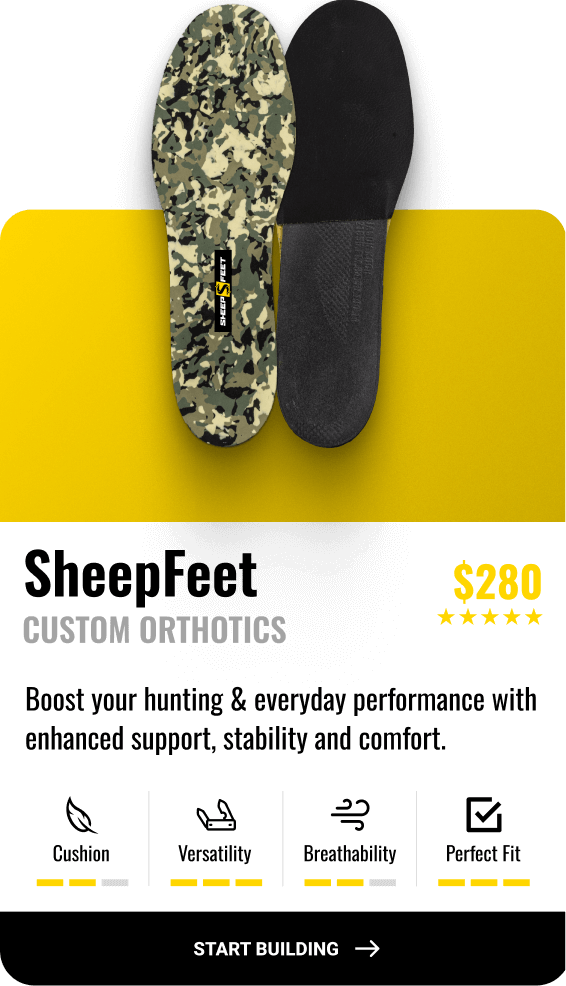
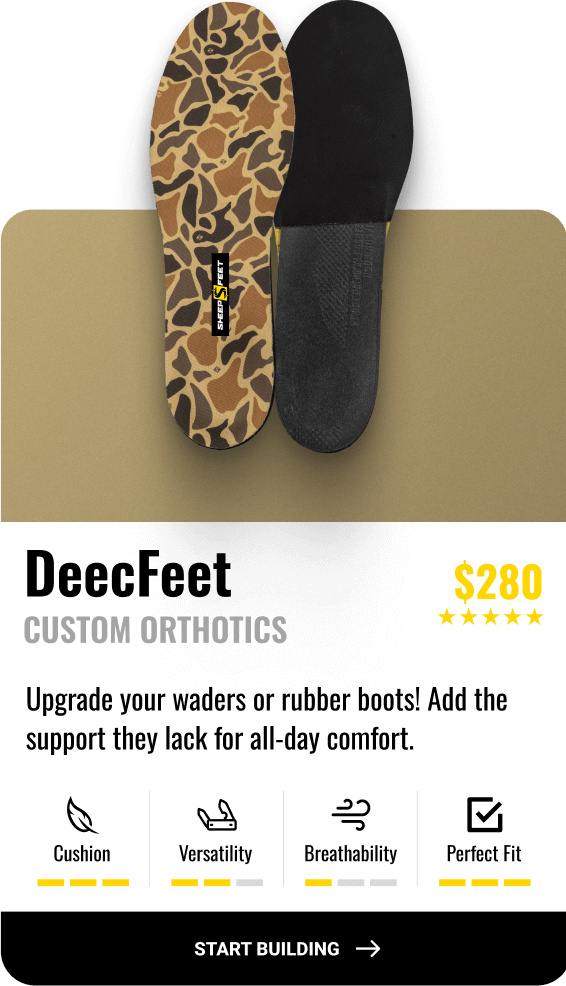
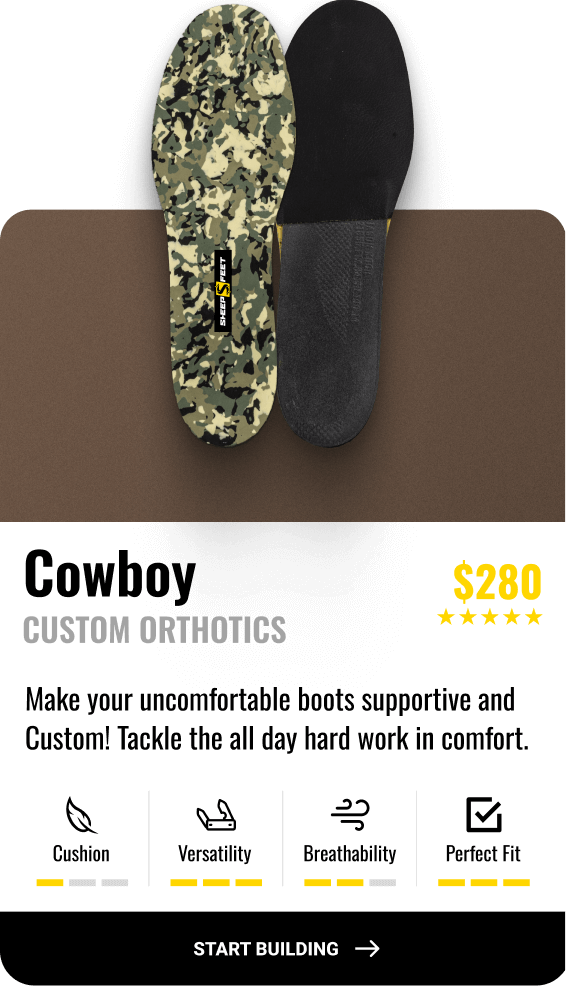
SheepFeet started with more than 70 years of foot science behind it. Caleb Bowen’s grandfather was a podiatrist. His father studied biomechanics at the School of Podiatric Medicine in Chicago, taught orthotics manufacturing to podiatrists, and spent over 40 years building custom orthotics for doctors and clinics across the country. That’s the foundation SheepFeet is built on — not a startup selling insoles, but a multigenerational orthotics lab that decided to make medical-grade custom orthotics available directly to the people who need them most.
The fitting process takes less than 10 minutes. Using the SheepFeet app on an iPhone, you scan your feet with CastDAR technology — a 3D scan that captures your exact arch height, heel geometry, and foot dimensions. No doctor’s office. No waiting room. No mold kit required if you have an iPhone. Your custom orthotics are then built to those exact specifications and shipped to you.
They’re HSA and FSA eligible. They come with a satisfaction guarantee — free adjustments until they’re right, and a full refund if they can’t be. And they’re built to last — not a product you’re replacing every year.
How the SheepFeet Fitting Process Works
Stop Managing It. Fix it.
SheepFeet custom orthotics are fitted to your exact foot — built for people who spend their days on hard floors without the option to sit down.
SHOP SHEEPFEET CUSTOM ORTHOTICS →The Nurse’s Plantar Fasciitis Protocol
If you’re in the middle of a bad stretch right now:
- Stretch your plantar fascia before you take your first step every morning — pull your toes toward your shin, hold 30 seconds, 3 reps before standing
- Roll a frozen water bottle under your foot for 10–15 minutes at the end of every shift
- Take anti-inflammatories with food to manage acute inflammation — don’t use them to mask pain and push through worsening damage
- Replace your footbed immediately — even switching to a quality OTC insole is better than leaving a flat factory footbed in place
Before your next contract or rotation:
- Get fitted for custom orthotics — the fitting takes less than 10 minutes with the SheepFeet app
- Break in any new work shoes with your orthotics already installed — not with the factory footbed, then swapping later
- Start a calf and arch stretching routine 2–3 weeks before a new rotation begins — the plantar fascia is more resilient when it’s pliable and warmed up consistently
Foot Pain for Healthcare Workers: Cause and Fix
Frequently Asked Questions
Can nurses prevent plantar fasciitis from coming back?
Yes — if the structural cause is addressed. Plantar fasciitis recurs in nurses who treat the symptoms (stretching, gel inserts, rest) without fixing the root problem: inadequate arch support under sustained load on hard floors. Nurses who switch to custom orthotics and maintain a consistent stretching routine typically break the recurrence cycle.
Are custom orthotics worth it for nurses compared to OTC insoles?
For nurses on 12-hour shifts on hard hospital floors, yes. OTC insoles provide some improvement but are built to an average arch profile. Under the sustained loading of a nursing shift, generic support compresses and loses effectiveness. Custom orthotics maintain their structure throughout the shift because the support is built into a rigid shell, not dependent on foam compression resistance.
Will SheepFeet orthotics fit in nursing clogs and work shoes?
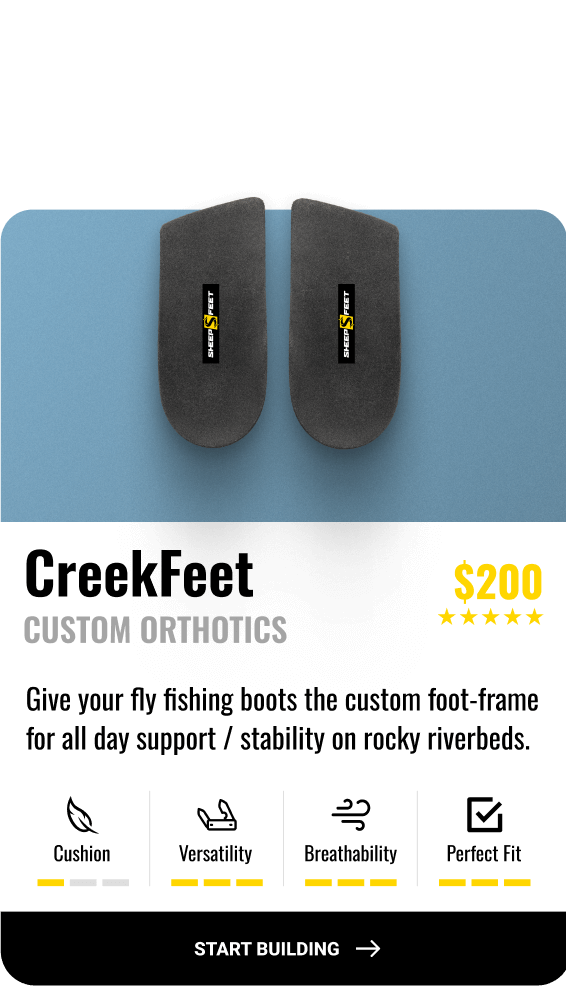
SheepFeet offers both full-length and half-length orthotics. The half-length option is specifically designed for shoes with lower volume — including many professional work shoes and clogs. If you have a question about compatibility with a specific shoe, the SheepFeet team will help you choose the right fit before you order.
Are SheepFeet orthotics HSA/FSA eligible?
Yes. SheepFeet custom orthotics are HSA and FSA eligible, which means you can use pre-tax dollars to cover the purchase. For nurses who already have HSA or FSA funds, this effectively reduces the out-of-pocket cost significantly.
How long until plantar fasciitis improves with custom orthotics?
With proper structural support, reduced loading during recovery, and consistent stretching, most people see meaningful improvement within 6–10 weeks. The key is that the orthotics create the conditions for the fascia to heal — by no longer reloading the damaged tissue in a compromised position with every step.
What if my plantar fasciitis has been going on for over a year?
Chronic plantar fasciitis — present for more than 6 months — does take longer to resolve than acute cases, but the mechanism is the same. Nurses with chronic plantar fasciitis who switch to proper custom support typically see gradual improvement over 3–6 months. If symptoms are severe, a podiatrist consultation alongside proper orthotic support is the right approach.
The Bottom Line
Plantar fasciitis in nurses isn’t a freak injury. It’s a predictable mechanical outcome of putting a foot that needs structural support into a shoe with a flat generic footbed and then standing on hard floors for 12 hours. That’s not a character flaw or a fitness issue. It’s an engineering problem — and engineering problems have engineering solutions.
The nurses who break the plantar fasciitis cycle are the ones who stop adding cushion to a structural problem and start giving their feet the actual support their arch needs. Custom orthotics built to your foot are that fix.
Your patients need you on your feet. Make sure your feet are ready for it.
Built for People Who Can’t Sit Down
Fitted to your exact foot using CastDAR scanning technology. HSA/FSA eligible. Satisfaction guaranteed.
SHOP SHEEPFEET CUSTOM ORTHOTICS →

