

How to Prevent Blisters on a Multi-Day Hunt

Day three of a seven-day elk hunt. You're two miles from camp, pack loaded, and there's a hot spot on your heel that's been building since morning. By the time you make it back, it's a full blister. Tomorrow it's worse. By day five, you're favoring it so hard your knee aches. The bull you passed on day two starts looking like the right call.
Blisters are the most underestimated threat on a multi-day hunt. They're not a minor inconvenience — they're a cascade failure. One blister changes your gait. Your gait change loads your knee. Your knee pain slows your pace. Your slowed pace compresses your schedule. The whole hunt unravels from a piece of damaged skin the size of a quarter.
The good news: blisters are almost entirely preventable. Not with luck or toughness — with the right gear setup and a few strategies that serious backcountry hunters use on every trip. This is the complete guide.
🔗 Why Your Feet Hurt After Hunting — And What to Do About It
“I never knew custom insoles could be this good. Incredibly comfortable in my Crispi boots. Can’t wait to go to the high country in them.”
— Verified SheepFeet Customer
What Actually Causes Blisters — And Why Hunters Get Them Worse
A blister forms when friction creates heat, heat separates the skin layers, and fluid fills the gap. That's the mechanism. But understanding why hunters are especially vulnerable requires looking at the specific conditions of a backcountry hunt:
Repetitive Friction on Uneven Terrain
Every step on flat ground creates a predictable friction pattern. Mountain terrain introduces lateral forces, heel lift on steep climbs, and forefoot pressure on descents — all of which create friction in locations your foot isn't used to. Over thousands of steps per day, even minor friction hotspots become blisters.
Moisture — The Blister Accelerant
Moisture softens skin, dramatically reducing its friction resistance. Sweat inside a boot on a hard uphill push can turn a foot that was fine at sunrise into a blister factory by noon. Wet skin blisters 4–5x faster than dry skin under the same friction load. Stream crossings, rain, and morning dew compound this. Most hunting blisters aren't caused by friction alone — they're caused by friction combined with moisture.
The Boot Fit Variable
A boot that fits perfectly in the store may not fit the same way after six miles of mountain terrain with a heavy pack. Feet swell under load — typically half a size over the course of a long day. A boot that's snug at the trailhead becomes a compression point by afternoon. Conversely, a boot with too much volume allows the foot to slide, creating friction with every step.
The Sock Problem
Cotton socks are the single most common cause of avoidable blisters on hunting trips. Cotton absorbs moisture and holds it against the skin. A cotton sock that's wet from sweat is essentially a friction amplifier inside your boot. This is not a minor detail — it's the easiest blister prevention step most hunters skip.
Poor Insole Fit
A flat or mismatched insole allows the foot to slide inside the boot on every step — particularly on heel lift during uphill terrain. That sliding is friction. A properly fitted insole that holds the heel and arch in correct position dramatically reduces the foot movement that causes heel and arch blisters. This is one of the most overlooked blister prevention strategies in hunting.

The 7 Blister Prevention Strategies That Actually Work
These are not theoretical — they're what experienced backcountry hunters use consistently. Implement all seven and blisters become rare. Implement the top three and you'll already be ahead of most hunters in the field.
1. Eliminate Cotton Socks Completely
This is the single highest-impact change most hunters can make. Replace every pair of cotton hunting socks with merino wool or synthetic moisture-wicking socks. Merino wool regulates temperature, wicks moisture away from the skin, and maintains some friction resistance even when damp. Darn Tough, Smartwool, and Farm to Feet all make hunting-specific options in various thicknesses. Budget $20–$30 per pair — they last for years.
|
💡 Sock thickness matching Match sock thickness to your boot's available volume. A thick sock in a tight boot creates pressure points. A thin sock in a roomy boot allows sliding. When in doubt, try your socks with your boots on before the hunt, walk around for 10 minutes, and check for pressure or looseness. |
2. Run a Two-Sock System for High-Friction Hunts
A thin liner sock under a heavier outer sock transfers friction from the skin-to-liner interface to the liner-to-outer interface. The socks rub against each other instead of against your skin. Liner socks should be thin, synthetic, and tight-fitting. Injinji toe liner socks eliminate inter-toe friction as well — worth the investment for hunters prone to toe blisters.
3. Fit Your Boots With the Right Insole Inside Them
Most hunters fit their boots with the factory insole, then later swap in an aftermarket option. The problem: your boot was fitted to your foot without the volume change that a thicker, structured insole creates. A custom orthotic changes the internal geometry of the boot — sometimes significantly. Always fit and lace your boots with your actual insoles inside them. The heel lock, midfoot snugness, and toe box volume all change with a proper insole in place.
🔗 Custom Orthotics vs. Stock Insoles: An Honest Comparison for Hunters
4. Master the Heel-Lock Lacing Technique
Heel lift during uphill terrain is the primary cause of heel blisters. The heel-lock (also called the 'runner's loop' or 'lace lock') uses the top eyelet of your boot to create a loop that anchors the heel in the boot and prevents it from rising on uphill steps. This single lacing adjustment eliminates the most common location for hunting blisters.
How to do it: thread each lace into the top eyelet from the outside, creating a small loop on each side. Then cross the laces and thread each through the opposite loop before tying normally. Pull snug — you should feel the heel seat firmly in the boot with no lift.
5. Apply Preventive Friction Protection Before You Start
Treat hotspot-prone areas before they become hotspots. Options include: Body Glide or similar anti-chafe balm on the heel, ball of foot, and between toes. Leukotape P applied directly to known friction points — this medical-grade tape is more durable than moleskin and won't roll during a wet day. Specialized blister prevention patches (Blist-O-Ban, Band-Aid Blister) on the heel and pinky toe.
|
⚠ Don't wait for a hotspot to apply protection Most hunters apply blister treatment after a blister forms. Apply friction protection at camp every morning before boots go on — especially on days 2 and beyond when skin is already sensitized from the previous day's miles. |
6. Manage Moisture Actively
Carry a small zip-lock bag with a change of socks for every two days of hunting. At lunch breaks or stream crossings, change into dry socks if yours are damp — this single habit prevents the mid-afternoon moisture buildup that causes most backcountry blisters. Camp chores in dry camp socks give your feet a full overnight recovery from moisture exposure.
For wet terrain or rain-heavy hunts: waterproof socks (Sealskinz, Dexshell) worn over a liner sock eliminate moisture from external sources. They're warm and not ideal for hot conditions, but for cold wet mountain hunts they're a genuine blister prevention tool.
7. Break In Your Boots With Your Actual Gear Setup
Breaking in boots with the wrong socks or the wrong insoles means you've broken them in for a different foot. When you swap gear, you reset the break-in process partially. Do every training hike in the exact sock-and-insole combination you'll hunt in. Your boot's leather and lining will form to that specific setup. Deviate on the hunt and you introduce new friction patterns your skin hasn't adapted to.
The Gear Change Most Hunters Miss: Insole Fit
Of the seven prevention strategies above, the insole connection is the one that surprises hunters most — because they don't think of insoles as a blister prevention tool. They think of them as a comfort or arch support tool.
But consider what a poorly-fitted insole actually does inside a boot: it allows the foot to move. The heel lifts slightly on every uphill step. The arch slides laterally on off-camber terrain. The forefoot shifts forward on descents. Each of these micro-movements is friction. Over 15,000 steps per day, micro-friction becomes macroscopic damage.
A custom orthotic fitted to your specific foot eliminates most of that movement at the source. The heel is seated correctly. The arch is supported in its neutral position. The forefoot pressure is distributed evenly. The foot stops sliding, and the friction that was causing blisters stops being generated.
|
"I never knew custom insoles could be this good. Incredibly comfortable in my Crispi boots. Can't wait to go to the high country in them." — Verified SheepFeet Customer |
|
"I now would rather wear my boots over my Nikes. SheepFeet turn any boot into a custom pair. They are worth it!" — Verified SheepFeet Customer |
Stop the Blister Problem at the Source
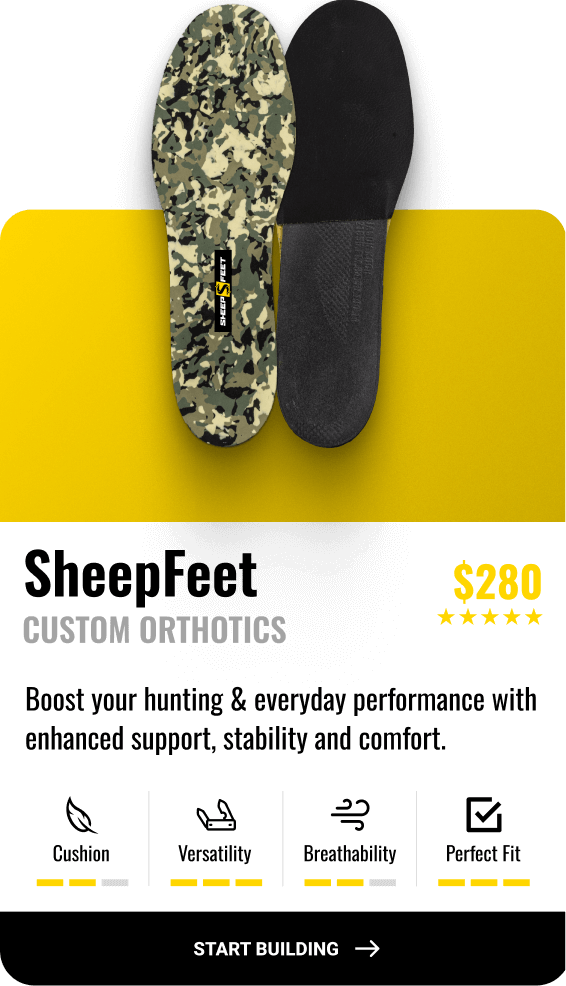
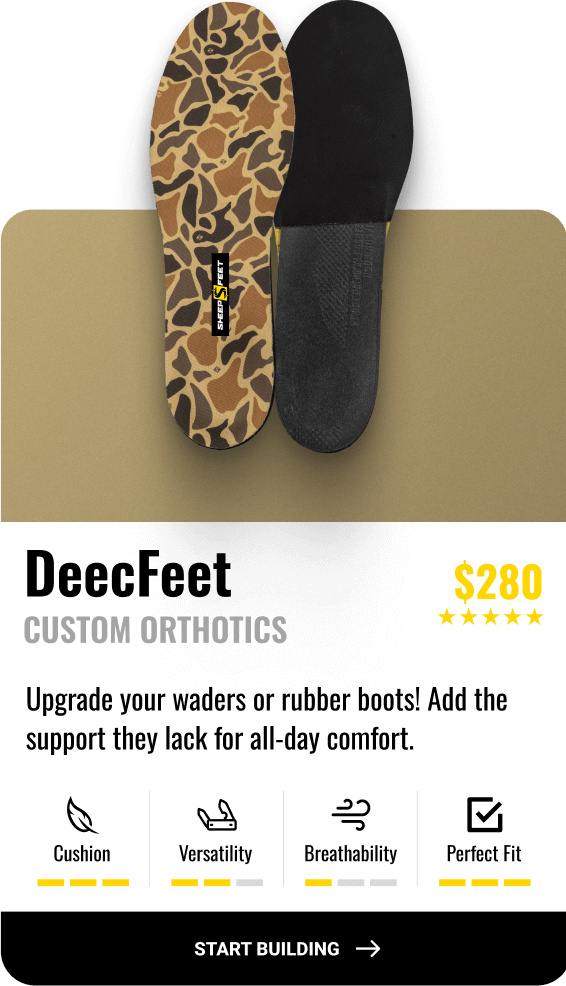
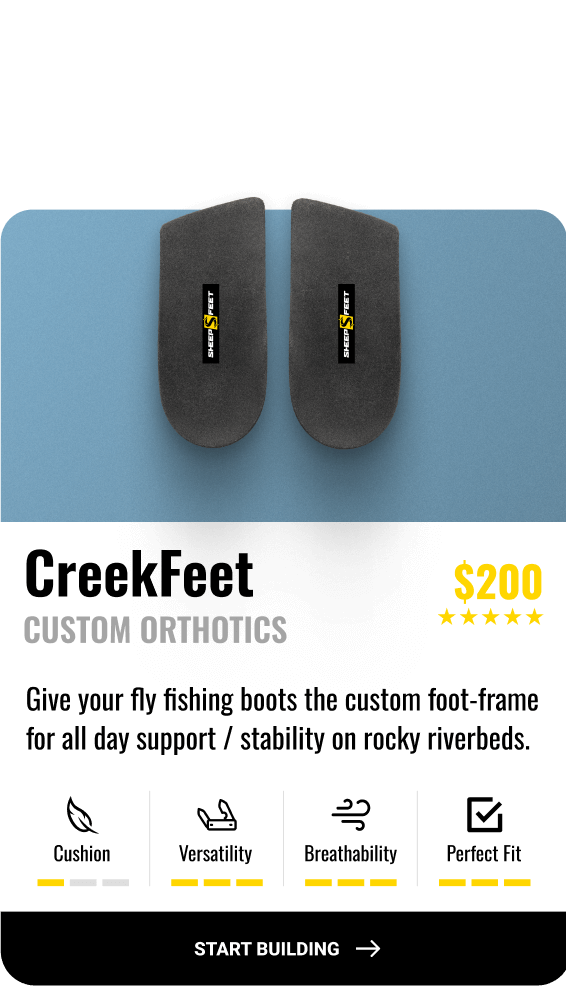
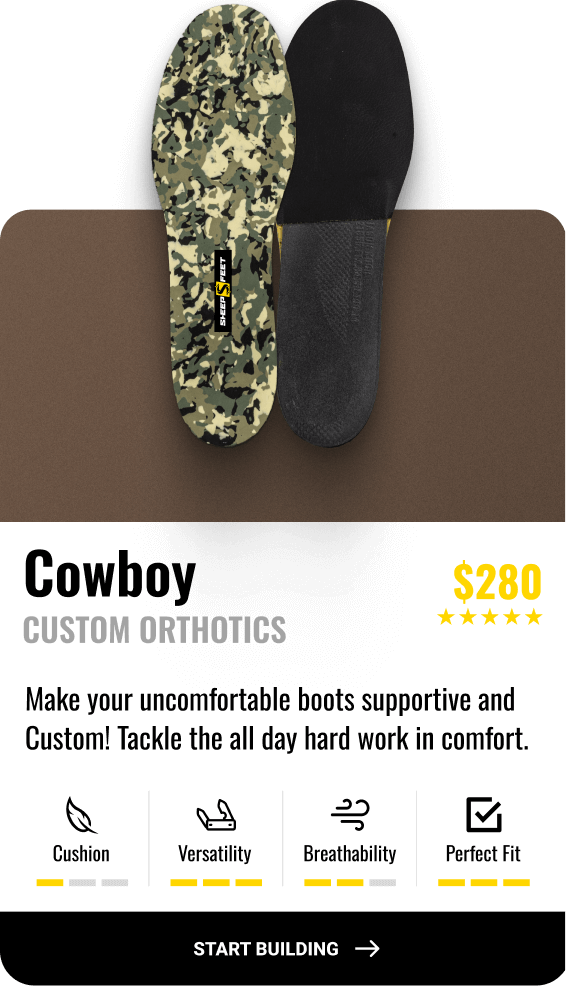
Most hunting blisters start with a foot that moves too much inside the boot. SheepFeet custom orthotics lock your heel and arch in place — fitted to your exact foot, built for mountain terrain.
SHOP SHEEPFEET CUSTOM ORTHOTICS →
The Complete Hunter's Blister Kit
Prevention is the goal, but every serious hunter carries treatment too. Here's what belongs in your blister kit — and why each item earns its weight:
|
Item |
Why It's in the Kit |
|---|---|
|
Leukotape P |
Medical-grade friction tape. Stays put for days, even wet. Far more durable than moleskin. Apply directly to skin over hotspots before they blister. |
|
Needle & lighter |
To drain blisters cleanly. Sterilize the needle, drain from the edge, leave the roof intact — the skin acts as a natural bandage. |
|
Alcohol wipes |
Clean the blister area before and after draining. Prevents infection in the field. |
|
Compeed blister patches |
Hydrocolloid patches that cushion and protect drained blisters. Stick well, last multiple days, protect the raw area. |
|
Body Glide stick |
Anti-friction balm. Apply to heel, ball of foot, between toes. Reapply at midday if moisture is high. |
|
Spare liner socks x2 |
Change at midday on wet days. The single highest-impact blister management habit in the field. |
|
Tincture of benzoin |
Applied under tape and patches, dramatically improves adhesion on sweaty skin. Worth the weight. |
|
💡 Weight check The complete blister kit above weighs under 3 oz and fits in a sandwich bag. There is no piece of backcountry gear with a better weight-to-impact ratio than this kit on a multi-day hunt. |
How to Treat a Blister in the Field
The most important rule: don't leave a blister unaddressed. A raw blister that's exposed to boot friction on day two becomes a serious wound by day four. Address it the same evening it appears.
-
Step 1: Clean the area with an alcohol wipe
-
Step 2: Sterilize a needle by passing it through a flame for 3–5 seconds
-
Step 3: Pierce the blister at the edge, not the center — this preserves the protective skin roof
-
Step 4: Gently press the fluid out and pat dry — do not remove the blister roof
-
Step 5: Apply tincture of benzoin to the surrounding skin and let dry for 30 seconds
-
Step 6: Cover with a Compeed patch or Leukotape — press firmly for 60 seconds to bond
-
Step 7: In the morning, check adhesion before boots go on. Add a second layer of Leukotape over the patch if needed for durability
|
⚠ Signs a blister has become infected Red streaking from the blister, increasing warmth and swelling, yellow or green fluid, fever. An infected blister in the backcountry is a medical situation. If you see these signs, prioritize getting out and getting to a doctor over completing the hunt. |

Frequently Asked Questions
Should I pop a blister or leave it alone?
For small blisters that aren't under pressure — leave them. The skin roof protects the raw tissue underneath and the blister will reabsorb on its own with rest. For blisters that are painful under the pressure of your boot, or that will clearly be exposed to more friction, drain them using the field protocol above but leave the roof intact. Never tear the skin off a blister.
How do I break in new hunting boots without getting blisters?
Start with short, flat hikes in the boots with your actual hunt socks and insoles. Increase distance and elevation gradually over 6–8 weeks before your hunt. Never take new or newly re-soled boots on a multi-day backcountry hunt without significant break-in time. The most common blister disaster scenario is new boots on day one of a 7-day hunt.
Are blister-resistant socks worth it?
Socks marketed as 'blister-resistant' — like Darn Tough and Wrightsock double-layer designs — do reduce friction through their construction. They're worth the premium for hunters prone to blisters. That said, no sock compensates for a boot that doesn't fit or an insole that allows excessive foot movement. Get the foundation right first.
Why do I get blisters between my toes?
Inter-toe blisters are caused by skin-on-skin friction in a moist environment. Injinji toe socks — which have individual toe pockets like gloves — eliminate this friction entirely by keeping toes separated. Worth trying if inter-toe blisters are a recurring problem on longer hunts.
Does foot powder help prevent blisters?
Foot powder reduces moisture and can help manage friction in dry conditions. It's less effective than a moisture-wicking sock system and tends to clump when wet — which can increase friction in wet conditions. Use it as a supplement to, not a replacement for, the moisture-wicking sock strategy. Gold Bond powder or similar at camp in the evening helps dry and freshen feet between hunting days.
The Bottom Line
Blisters on a multi-day hunt are not inevitable. They're the predictable result of preventable friction, preventable moisture, and preventable foot movement inside the boot. Fix those three variables — with the right socks, the right insole, and the right lacing technique — and most hunters eliminate 80% of their blister risk before the hunt starts.
Stop the Blister Problem at the Source
Most hunting blisters start with a foot that moves too much inside the boot. SheepFeet custom orthotics lock your heel and arch in place — fitted to your exact foot, built for mountain terrain.
SHOP SHEEPFEET CUSTOM ORTHOTICS →

